 by
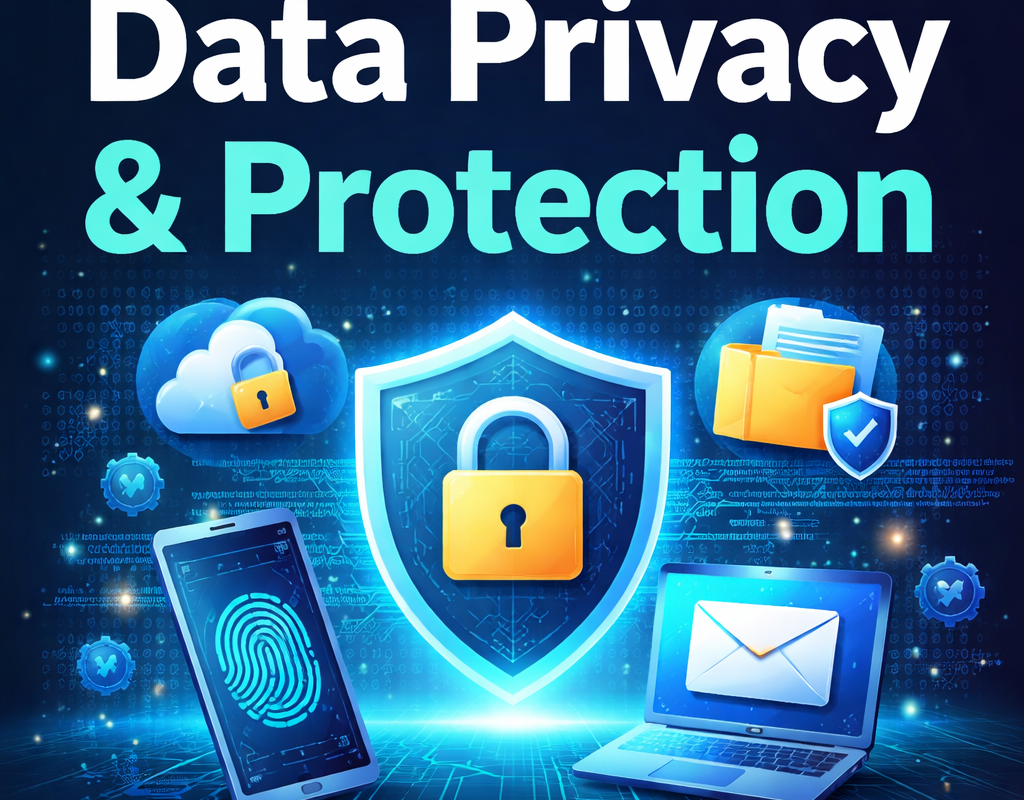
by Data Privacy and Protection refers to the practices, technologies, and policies used to safeguard sensitive and personal information from unauthorized access, misuse, loss, or theft. In today’s digital world, where data is constantly generated, stored, and shared, protecting that data has become a critical part of Cybersecurity.
Introduction
With the rapid growth of internet usage, cloud computing, mobile applications, and digital transactions, vast amounts of data are being collected every second. This includes personal details, financial records, business data, and more.
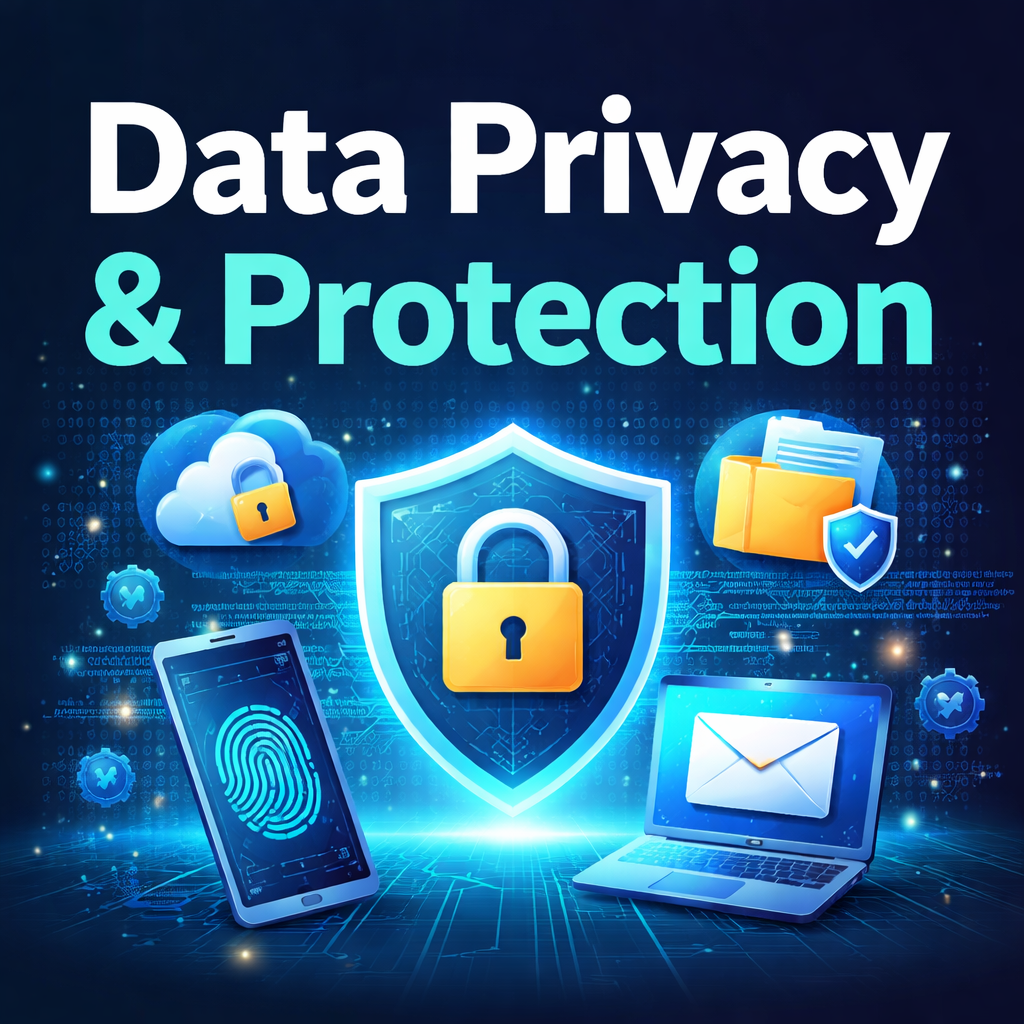
Data Privacy focuses on who has access to data, while Data Protection focuses on how that data is secured. Both work together to ensure trust, compliance, and safety in digital systems.
What is Data Privacy?
Data Privacy is the concept of controlling how personal information is collected, used, shared, and stored.
It ensures:
- Users have control over their personal data
- Organizations collect only necessary information
- Data is used transparently and ethically
Example:
When you sign up for a website, your name, email, and preferences are stored. Data privacy ensures this information is not misused or shared without consent.
What is Data Protection?
Data Protection refers to the technical and organizational measures used to secure data from:
- Unauthorized access
- Data breaches
- Cyberattacks
- Accidental loss
It includes:
- Encryption
- Access control
- Firewalls
- Secure storage systems
- Backup and recovery mechanisms
Data Privacy vs Data Protection
| Aspect | Data Privacy | Data Protection |
| Focus | Data usage and control | Data security and safeguarding |
| Concern | Who can access data | How data is protected |
| Nature | Policy & legal | Technical & operational |
| Example | User consent | Encryption, firewalls |
Why Data Privacy and Protection is Important
- Prevents Identity Theft
Personal data like Aadhaar, PAN, or banking info must be protected. - Avoids Financial Loss
Cybercriminals can exploit weak systems. - Builds Customer Trust
Businesses that protect data gain credibility. - Ensures Legal Compliance
Organizations must follow data protection laws. - Protects Business Reputation
Data breaches can damage brand image.
Common Threats to Data Privacy
1. Phishing Attacks
Fake emails or websites trick users into sharing sensitive data.
2. Malware & Ransomware
Malicious software that steals or locks data.
3. Data Breaches
Unauthorized access to databases.
4. Insider Threats
Employees misusing or leaking data.
5. Weak Passwords
Easy-to-guess passwords increase vulnerability.
Key Data Protection Techniques
1. Encryption
Converts data into unreadable format. Only authorized users can decrypt it.
2. Authentication & Authorization
Ensures only verified users access systems.
3. Access Control
Limits access based on roles and permissions.
4. Firewalls
Monitors and controls incoming and outgoing network traffic.
5. Regular Backups
Helps recover data in case of loss or attack.
6. Secure Cloud Practices
Important in Cloud Security environments.
7. Zero Trust Model
A security approach where no user is trusted by default.
(Associated with Zero Trust Architecture)
Data Protection Laws & Regulations
Different countries have laws to protect user data:
- GDPR (General Data Protection Regulation – Europe)
- CCPA (California Consumer Privacy Act)
- India’s Digital Personal Data Protection framework
These laws ensure:
- User consent
- Data transparency
- Right to access and delete data
Data Privacy in Organizations
Organizations must:
- Collect only required data
- Store data securely
- Limit internal access
- Train employees on security practices
- Monitor systems for threats
- Conduct regular audits
Role of Cloud in Data Protection
With the rise of cloud services, data is often stored on remote servers. Cloud providers implement:
- Encryption at rest and in transit
- Multi-factor authentication
- Identity and access management
- Continuous monitoring
This is a key part of modern Cloud Security strategies.
Best Practices for Individuals
- Use strong and unique passwords
- Enable two-factor authentication (2FA)
- Avoid sharing sensitive information online
- Be cautious of suspicious emails and links
- Keep software and devices updated
- Use antivirus and security tools
- Review privacy settings on apps and platforms
Advantages (Benefits)
- Protects sensitive personal and business data
- Reduces risk of cyberattacks
- Ensures compliance with regulations
- Builds trust with users and customers
- Improves overall system security posture
Limitations / Challenges
- Implementation can be costly
- Requires continuous monitoring and updates
- Human error remains a major risk
- Balancing usability and security can be difficult
- Rapid evolution of cyber threats
Future of Data Privacy and Protection
- Increased use of AI for threat detection
- Stronger global data protection regulations
- Wider adoption of Zero Trust security models
- More focus on user-controlled privacy
- Advanced encryption technologies
Frequently Asked Questions (FAQs)
1. What is the main goal of data privacy?
To ensure that personal data is collected, used, and shared in a transparent and controlled manner.
2. Why is data protection important in cybersecurity?
It helps prevent unauthorized access, data breaches, and cyberattacks.
3. What is the difference between privacy and security?
Privacy focuses on data usage, while security focuses on protecting data from threats.
4. How can individuals protect their data?
By using strong passwords, enabling 2FA, avoiding phishing, and keeping systems updated.
5. What industries need data protection the most?
Banking, healthcare, e-commerce, government, and IT sectors.
Conclusion
Data Privacy and Protection is a fundamental part of the digital world and a core pillar of Cybersecurity. As data continues to grow exponentially, protecting it becomes more critical than ever.
Whether you are an individual user or an organization, adopting strong privacy practices and security measures is essential to stay safe in today’s connected environment.