
 by
Introduction
Email Security is a critical part of today’s digital ecosystem, where almost every online communication depends on secure email systems. Whether it is business communication, banking alerts, SaaS platforms, or personal messaging — everything depends heavily on email systems.
However, this dependency has also made email one of the primary targets for cyber attackers. Phishing attacks, spam campaigns, malware links, and identity theft have increased dramatically in 2025.
Cybercriminals are no longer sending random spam emails. Instead, they use AI-powered phishing techniques to create highly realistic fake emails that can easily trick users.
Because of this, Email Security has become a critical pillar of modern cybersecurity and is closely connected with data privacy and protection in digital systems.
What is Email Security?
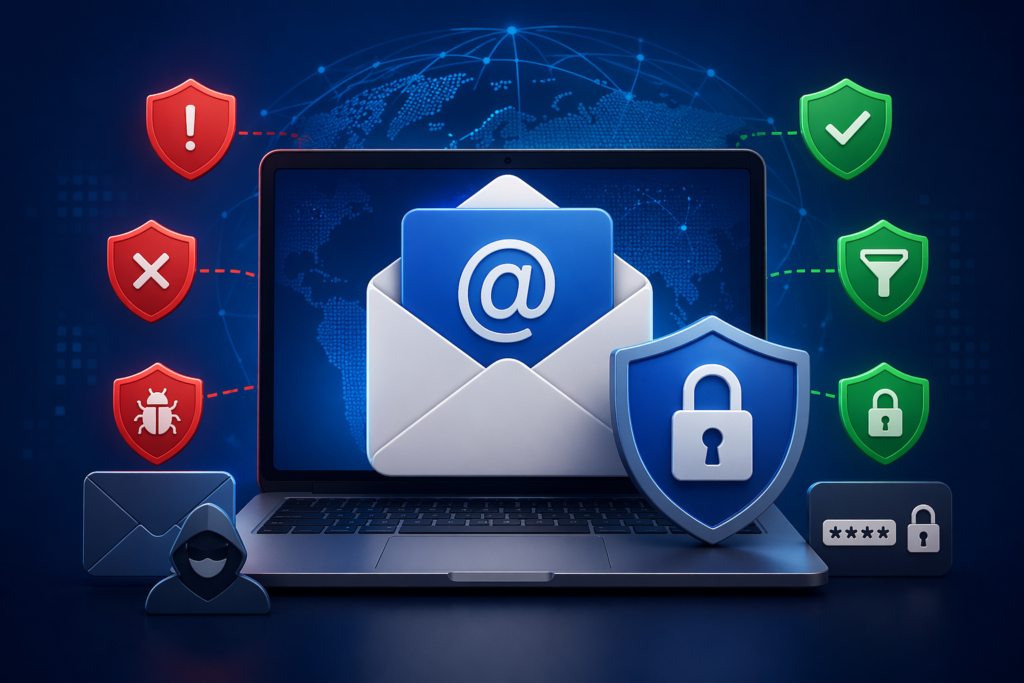
Email security is a combination of technologies, policies, and practices designed to protect email communication from unauthorized access, phishing attacks, spam, and malicious threats.
Its main goals include:
- Securing email communication
- Detecting and blocking fake emails
- Protecting sensitive data
- Preventing malware distribution
Today, email security is no longer limited to antivirus protection and is now part of advanced cloud security best practices in enterprise systems.
Why Email Security is Critical
In 2025, the nature of cyber threats has changed completely. Traditional spam filters are no longer sufficient.
Modern threats include:
- AI-generated phishing emails
- Credential stealing attacks
- Business Email Compromise (BEC)
- Zero-day malware links
- Social engineering attacks
If email security is weak:
- Sensitive company data can be leaked
- Financial fraud can occur
- Customer trust can be lost
- Entire IT infrastructure can be compromised
This is why organizations are now adopting zero-trust security models and advanced email protection systems.
7 Core Email Security Techniques
1. Advanced Spam Filtering Systems
Spam filtering acts as the first line of defense in email security.
Modern spam filters use AI and machine learning to analyze email patterns such as:
- Sender reputation checks
- Email header analysis
- Suspicious keyword detection
- Link scanning
Advanced systems can even detect unknown phishing attempts in real time.
2. Multi-Factor Authentication (MFA) Implementation
Passwords alone are no longer secure.
MFA adds an extra layer of protection such as:
- Password + OTP
- Password + Authenticator App
- Password + Biometric verification
Even if an attacker steals a password, they cannot access the account without the second verification factor.
3. Email Encryption (End-to-End Protection)
Encryption ensures that only the sender and the intended receiver can read the email content.
Types include:
- TLS encryption (in-transit protection)
- End-to-End encryption (complete message protection)
Even if hackers intercept the email, the data remains unreadable.
4. Phishing Awareness Training
Human error remains the weakest link in cybersecurity.
Employees should be trained to:
- Identify fake emails
- Avoid suspicious links
- Never open unknown attachments
- Verify sender identity
Regular phishing simulation tests also help improve awareness.
5. Secure Email Gateway Deployment
A Secure Email Gateway (SEG) filters all incoming and outgoing emails.
It detects:
- Malware attachments
- Phishing URLs
- Spam campaigns
- Data leakage attempts
This is essential for enterprise-level security systems.
6. Email Authentication Protocols (SPF, DKIM, DMARC)
These protocols help prevent email spoofing:
- SPF → Verifies sender IP address
- DKIM → Ensures email integrity
- DMARC → Enforces authentication policy
Together, they prevent attackers from sending emails using fake domains.
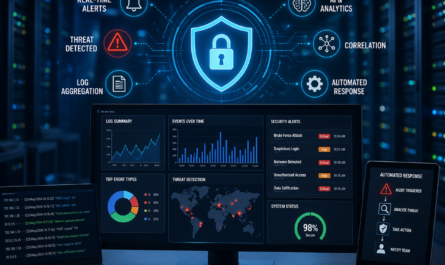
7. Continuous Email Monitoring & Logging
Real-time monitoring of email systems is crucial.
Security teams track:
- Login attempts
- Unusual IP access
- Changes in email forwarding rules
- Suspicious activity patterns
AI-based SIEM tools automate this process for better threat detection.
8. Strong Password Policies
Weak passwords are one of the easiest ways for attackers to gain access.
Best practices include:
- Using at least 12+ characters
- Combining letters, numbers, and symbols
- Changing passwords regularly
- Avoiding reuse across platforms
Password managers are also highly recommended.
9. Regular System Updates & Patch Management
Outdated systems often contain security vulnerabilities.
Regular updates ensure:
- Security patches are applied
- Known exploits are fixed
- System performance is improved
Unpatched systems are easy targets for attackers.
Real-World Explanation Video on Email Security & Phishing Attacks
Watch here:
Real-World Importance of Email Security
Large organizations such as Google, Microsoft, Amazon, and major banking institutions process billions of emails daily.
Without strong email security systems:
- Massive data breaches could occur
- Financial fraud would increase
- Critical infrastructure could be compromised
This is why enterprise-grade email security relies on multi-layer defense models.
Conclusion
Email security is no longer optional — it is a necessity in today’s digital world.
In the era of AI-powered cyberattacks, basic protection is not enough. Organizations must adopt layered security strategies.
If these 9 powerful techniques are implemented properly:
- Phishing attacks are significantly reduced
- Spam emails are blocked effectively
- Data security becomes stronger
- Overall cyber risk is minimized