
 by
by Introduction
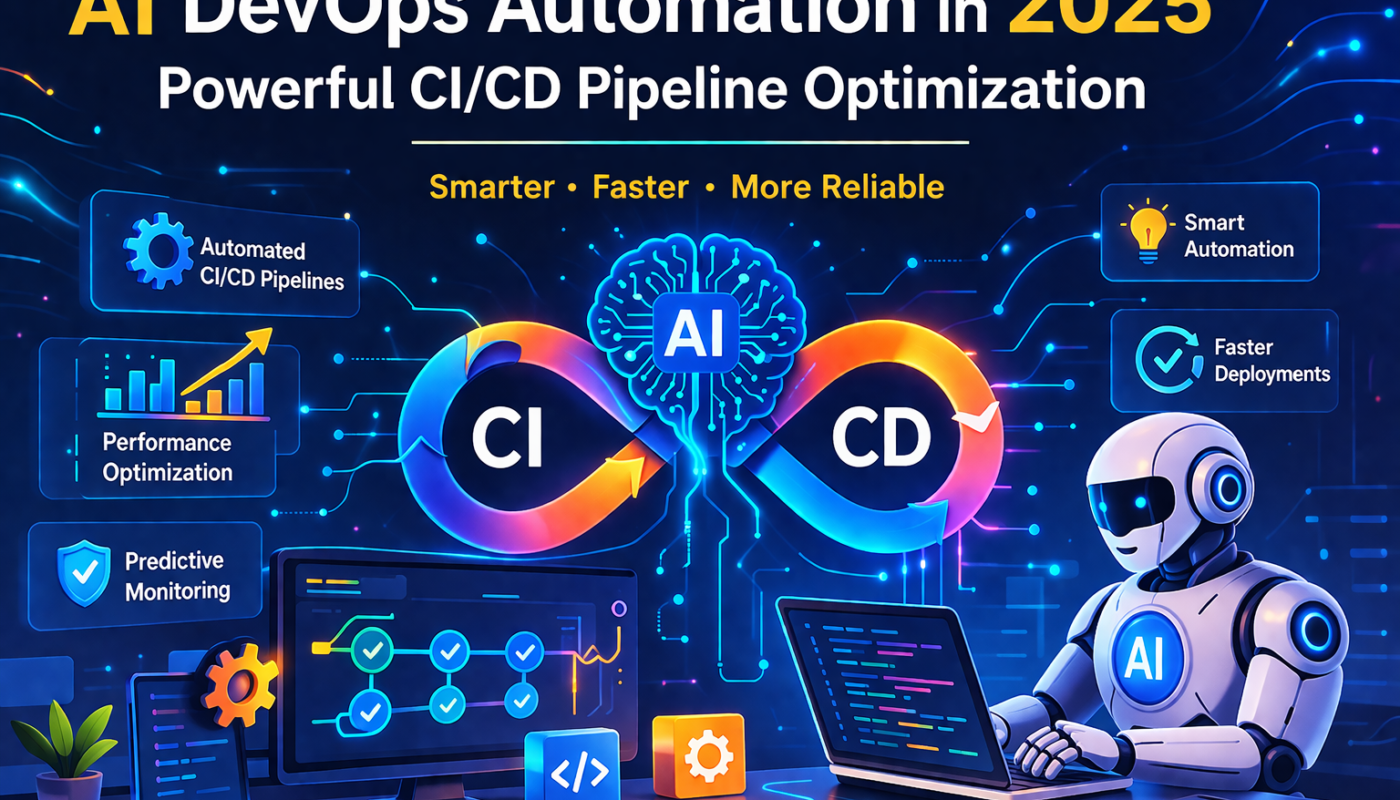
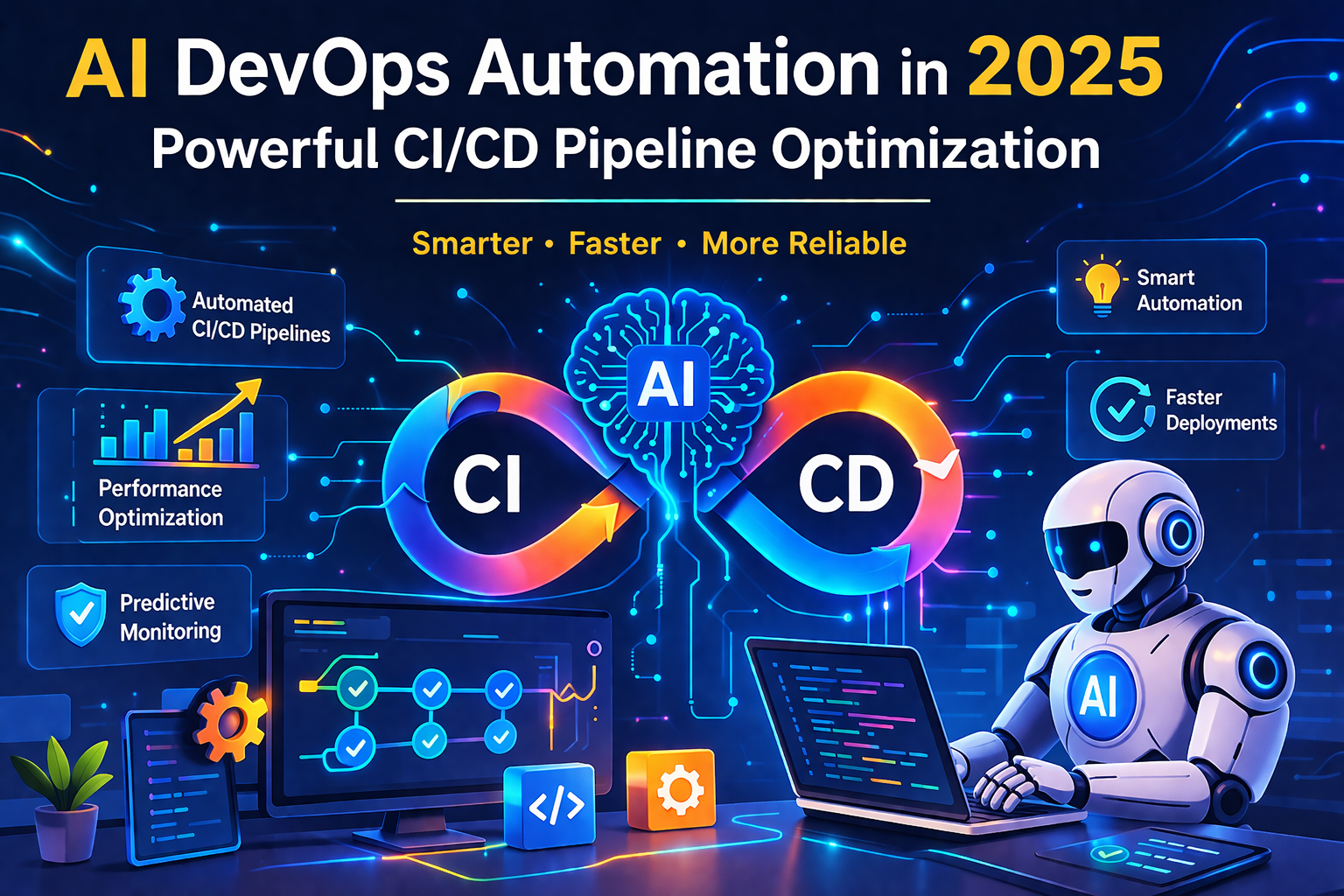
AI DevOps Automation in 2025 is transforming the way modern software systems are built, tested, and deployed. With increasing demand for faster releases and reliable systems, organizations are adopting intelligent automation to optimize CI/CD pipelines and reduce manual effort.
DevOps has always focused on collaboration between development and operations teams. However, with the rise of complex cloud-native applications, microservices architectures, and distributed systems, traditional CI/CD pipelines are no longer enough. AI is now becoming the driving force that transforms DevOps into a predictive, self-healing, and fully optimized system.
What is DevOps Automation with AI in 2025?
DevOps automation with AI refers to the integration of artificial intelligence, machine learning, and predictive analytics into the DevOps lifecycle. Instead of relying only on predefined scripts and manual monitoring, AI enables systems to learn from data and improve continuously.This growth of AI DevOps Automation enables organizations…”
With AI-powered DevOps, organizations can:
- Detect issues before deployment
- Predict pipeline failures
- Optimize build and release cycles
- Analyze logs and system behavior in real time
- Automate rollback decisions without human intervention
This evolution is especially powerful in distributed systems like Microservices Architecture in 2025: Building Scalable Modern Applications, where hundreds of services interact simultaneously.
How AI is Transforming CI/CD Pipelines
1. Intelligent Code Analysis
AI scans code in real time during commits and identifies:
- Security vulnerabilities
- Performance issues
- Code quality inconsistencies
This reduces bugs early in the development cycle and improves software stability.
2. Smarter Build Optimization
Traditional builds often waste time on unnecessary processes. AI improves this by:
- Prioritizing critical modules
- Reusing cached dependencies
- Running parallel builds efficiently
- Eliminating redundant steps
As a result, build time is significantly reduced.
This is one of the key advantages of AI DevOps Automation in modern systems
3. Predictive Testing Automation
Instead of running full test suites, AI selects only relevant test cases based on:
- Recent code changes
- Risk probability
- Historical failure patterns
This makes testing faster and more accurate.
4. Intelligent Deployment Management
AI evaluates multiple factors before deployment:
- Server health status
- Traffic load patterns
- Past deployment success rates
Based on this analysis, AI can:
- Proceed with deployment
- Delay release
- Trigger automatic rollback
Key Benefits of AI in DevOps Automation
1. Faster Software Delivery
AI removes manual bottlenecks, enabling continuous and faster release cycles.
2. Enhanced Security
AI helps detect vulnerabilities early and integrates with security frameworks like AI-Based Malware Detection Systems in 2025: Advanced Threat Intelligence for Enterprises, ensuring safer deployments.
3. Predictive Problem Detection
Instead of reacting to failures, AI predicts system issues before they occur.
4. Cost Efficiency
Optimized resource utilization reduces unnecessary cloud and infrastructure costs.
5. Self-Healing Systems
Modern AI-driven systems can automatically:
- Restart failed services
- Reroute network traffic
- Fix configuration issues
- Restore system stability
AI-Powered DevOps Tools in 2025
Organizations are widely using advanced tools such as:
- AI-based CI/CD platforms
- Intelligent monitoring systems
- AIOps (AI for IT Operations) solutions
- Cloud-native automation tools
These tools integrate seamlessly with cloud ecosystems and API layers, especially in systems like API Gateway Management in Cloud Systems 2025: Secure and Efficient API Control, which ensures secure communication between services.
Real-World Use Cases of AI in DevOps
1. E-commerce Platforms
AI ensures smooth performance during high-traffic events like sales without downtime.
2. Banking Systems
AI improves transaction reliability and detects system anomalies in real time.
3. SaaS Applications
Continuous updates and feature rollouts happen without service disruption.
4. Cloud Service Providers
AI dynamically scales infrastructure based on real-time demand prediction.
These environments also depend on monitoring systems such as SIEM Evolution in 2025: Real-Time Security Monitoring and Automated Threat Response for security visibility and incident response.
Challenges in AI-Based DevOps Automation
1. Integration Complexity
Legacy systems require significant changes to adopt AI-based DevOps.
2. Data Requirements
AI systems require large volumes of accurate and structured data to function effectively.
3. Risk of Incorrect Predictions
Incorrect AI decisions may lead to unnecessary rollbacks or delays in deployment.
4. Security Concerns
AI models themselves must be secured against manipulation and adversarial attacks.
Future of DevOps Automation with AI
The future of DevOps is moving toward fully autonomous systems where:
- AI writes and tests code automatically
- Deployments occur without human approval
- Infrastructure scales automatically based on demand
- Security threats are detected and mitigated instantly
This will make software delivery faster, smarter, and highly reliable across all industries.
Best Practices for Implementation
To successfully implement AI in DevOps:
- Start with small automation use cases
- Ensure high-quality data input for AI models
- Continuously monitor AI-driven decisions
- Maintain human oversight for critical deployments
- Integrate security at every stage of pipeline
Conclusion
In conclusion, AI DevOps Automation enables faster delivery and better security.
DevOps Automation with AI in 2025: smarter CI/CD pipeline optimization is revolutionizing the way software is developed and deployed. It enables organizations to achieve faster release cycles, improved system reliability, predictive monitoring, and enhanced security.
As cloud-native applications and microservices continue to grow, AI-driven DevOps becomes a core pillar of modern IT infrastructure. Businesses adopting this approach early will gain a significant competitive advantage in scalability, efficiency, and operational excellence. Overall, AI DevOps Automation is becoming essential for modern DevOps teams.


4 thoughts on “AI DevOps Automation in 2025: Powerful CI/CD Pipeline Optimization”