 by
by Introduction
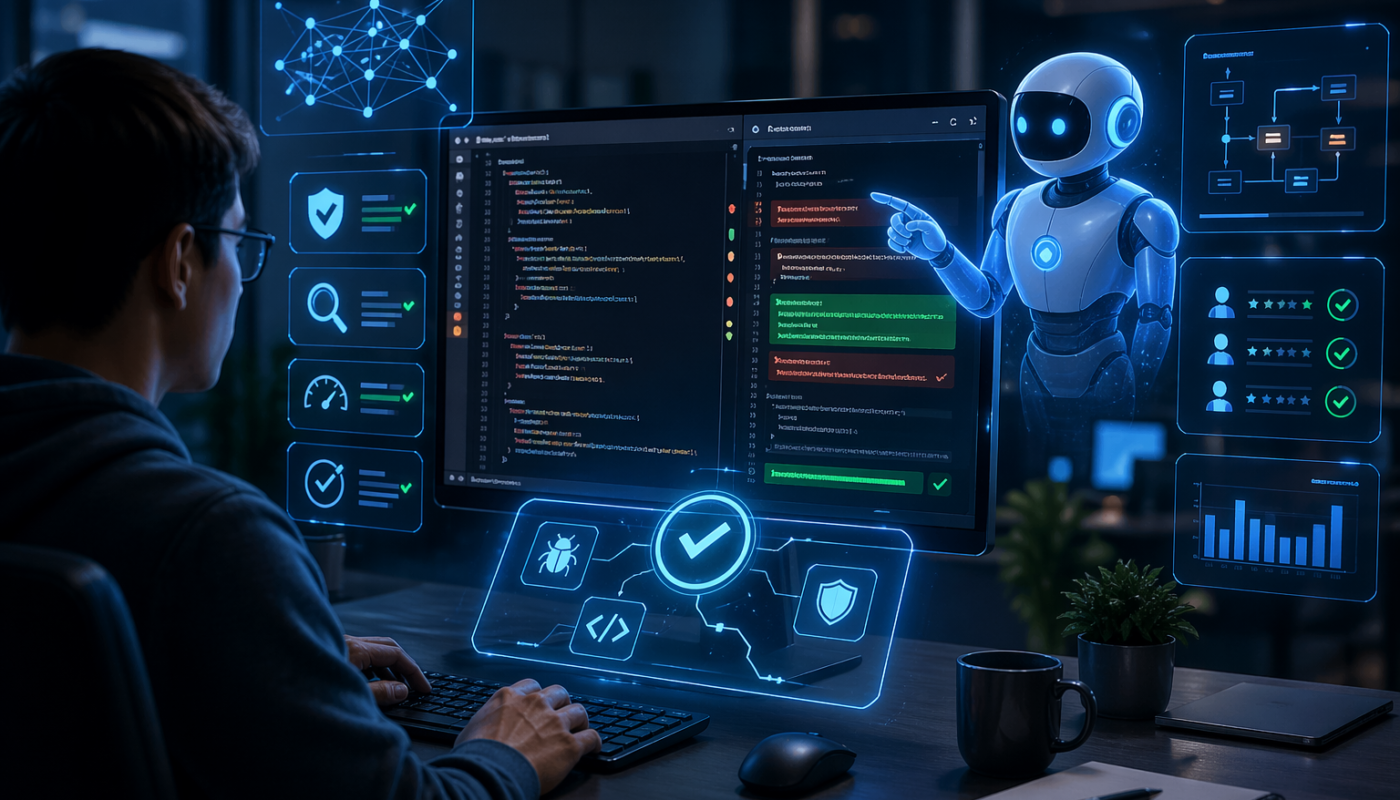
AI-Powered Code Review Systems in 2025 are transforming how modern software teams maintain code quality, security, and development speed. Traditional manual code reviews often create bottlenecks, slow down releases, and allow hidden bugs to slip into production.
With the rapid rise of AI-generated code, the need for intelligent, automated code review has become more critical than ever. AI-Powered Code Review Systems in 2025 provide real-time analysis, detect vulnerabilities, and ensure consistent coding standards across large-scale applications.
Today, organizations are adopting AI-driven review tools to accelerate development cycles while improving software quality and security simultaneously.
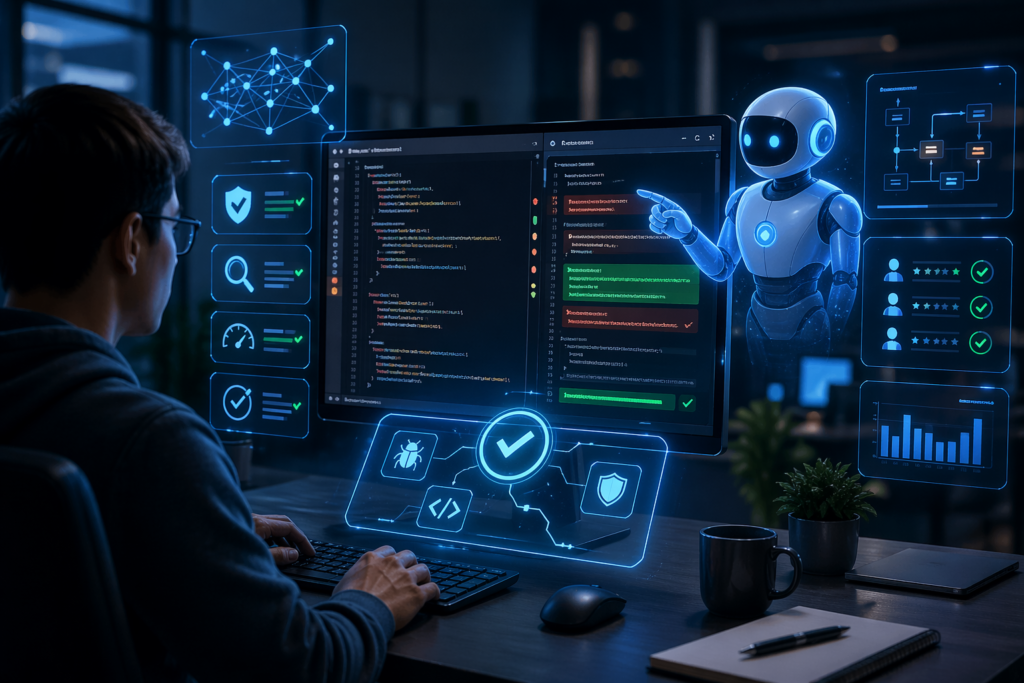
What Are AI-Powered Code Review Systems?
AI-Powered Code Review Systems use machine learning, natural language processing (NLP), and static analysis techniques to automatically review code changes.
These systems analyze:
- Code structure and logic
- Security vulnerabilities
- Performance inefficiencies
- Coding standards and best practices
Unlike traditional tools, AI systems understand developer intent and context, making reviews smarter and more accurate.
Why AI Code Review Is Essential
Software development has changed dramatically due to AI coding tools. Developers now produce code faster than ever, but reviewing that code has become a major challenge.
- Developers using AI tools generate significantly more code
- Pull requests have increased massively
- Manual review processes cannot keep up
AI-powered review systems solve this by automating repetitive checks and providing instant feedback.
Research shows:
- AI tools reduce review time by up to 40%
- Production bugs decrease by around 62%
- Developers merge 39% more pull requests
This makes AI code review a critical component of modern DevOps pipelines.
How AI-Powered Code Review Systems Work
1. Code Analysis Using AI Models
AI scans code using trained models that understand syntax, logic, and patterns.
2. Automated Pull Request Review
Every PR is automatically analyzed, and suggestions are generated instantly.
3. Bug & Vulnerability Detection
AI detects:
- SQL injection risks
- Cross-site scripting (XSS)
- Hardcoded credentials
4. Context-Aware Suggestions
Unlike traditional tools, AI understands the project context and gives meaningful recommendations.
5. Continuous Integration (CI/CD) Integration
AI tools integrate with platforms like:
- GitHub
- GitLab
- Bitbucket
This ensures automated quality checks before deployment. AI-powered workflows are further improved with AI-driven CI/CD automation, making deployments faster and more reliable.
7 Powerful Benefits of AI-Powered Code Review Systems
AI-Powered Code Review Systems in 2025 provide significant advantages in speed, quality, and security for modern development teams.
1. Faster Code Reviews
AI eliminates waiting time by reviewing code instantly, reducing delays in development pipelines.
Following code review best practices helps teams improve speed and maintain consistent development quality.
2. Improved Code Quality
AI detects hidden bugs, edge cases, and performance issues that human reviewers may miss.
3. Enhanced Security
AI systems identify vulnerabilities early, reducing the risk of cyberattacks and data breaches .For complete protection, combining AI reviews with application security protection strengthens defense against modern threats.
4. Consistency Across Codebase
AI enforces coding standards uniformly, eliminating inconsistencies caused by human reviewers.
5. Reduced Developer Workload
Developers can focus on:
- Architecture
- Business logic
- Innovation
Instead of repetitive manual checks.
6. Faster Developer Learning
AI acts as a real-time mentor, helping junior developers improve coding skills faster.
7. Scalability for Large Teams
AI review systems handle large volumes of code efficiently, making them ideal for enterprise environments.
Top AI-Powered Code Review Tools
Some of the most popular tools include:
- GitHub Copilot Code Review
- Amazon CodeGuru Reviewer
- CodeRabbit
- Cursor Bugbot
- Claude Code Review
These tools provide:
- Real-time suggestions
- Automated fixes
- Deep code analysis
Platforms like CodeRabbit can review pull requests in seconds and provide feedback similar to senior engineers.
Challenges of AI Code Review Systems
Despite their advantages, AI systems are not perfect.
1. Limited Understanding of Business Logic
AI may struggle with complex domain-specific decisions.
2. False Positives
Some tools generate unnecessary alerts, requiring manual filtering.
3. Security Limitations
AI may miss critical vulnerabilities in some cases.
4. Over-Reliance on Automation
Teams relying only on AI risk missing deeper architectural issues.
Best Practices for Implementing AI Code Review Systems
To get maximum benefits:
Combine AI + Human Review
AI should assist, not replace human reviewers.
Use Multi-Layer Review Strategy
- IDE-level checks
- PR-level automation
- Architecture-level analysis
Customize Rules & Policies
Align AI tools with your coding standards and security requirements.
Monitor Performance Metrics
Track:
- Bug detection rate
- Review time
- False positives
Train Teams for AI Adoption
Ensure developers understand how to use AI tools effectively.
Future of AI-Powered Code Review Systems
AI code review is evolving rapidly toward:
1. Autonomous Review Agents
AI agents capable of reviewing, fixing, and optimizing code automatically.
2. Context-Aware Deep Learning Models
Systems that understand full application architecture.
3. Self-Healing Code Systems
AI that not only detects issues but also fixes them in real time.
4. Integration with DevSecOps
Security will become fully automated within development pipelines.
Conclusion
AI-Powered Code Review Systems in 2025 are revolutionizing software development by combining speed, accuracy, and intelligence. They eliminate bottlenecks, improve code quality, and enhance security while enabling faster releases.
However, the most effective approach is a hybrid model, where AI handles repetitive tasks and human developers focus on critical thinking and architecture.
Organizations that adopt AI-powered code review today will gain a competitive advantage in speed, scalability, and software quality in the future.