
 by
by Introduction
In 2025, cybersecurity has become one of the most critical priorities for organizations due to the rapid increase in sophisticated cyberattacks. Traditional security systems that rely on predefined rules and manual monitoring are no longer sufficient to handle modern threats.
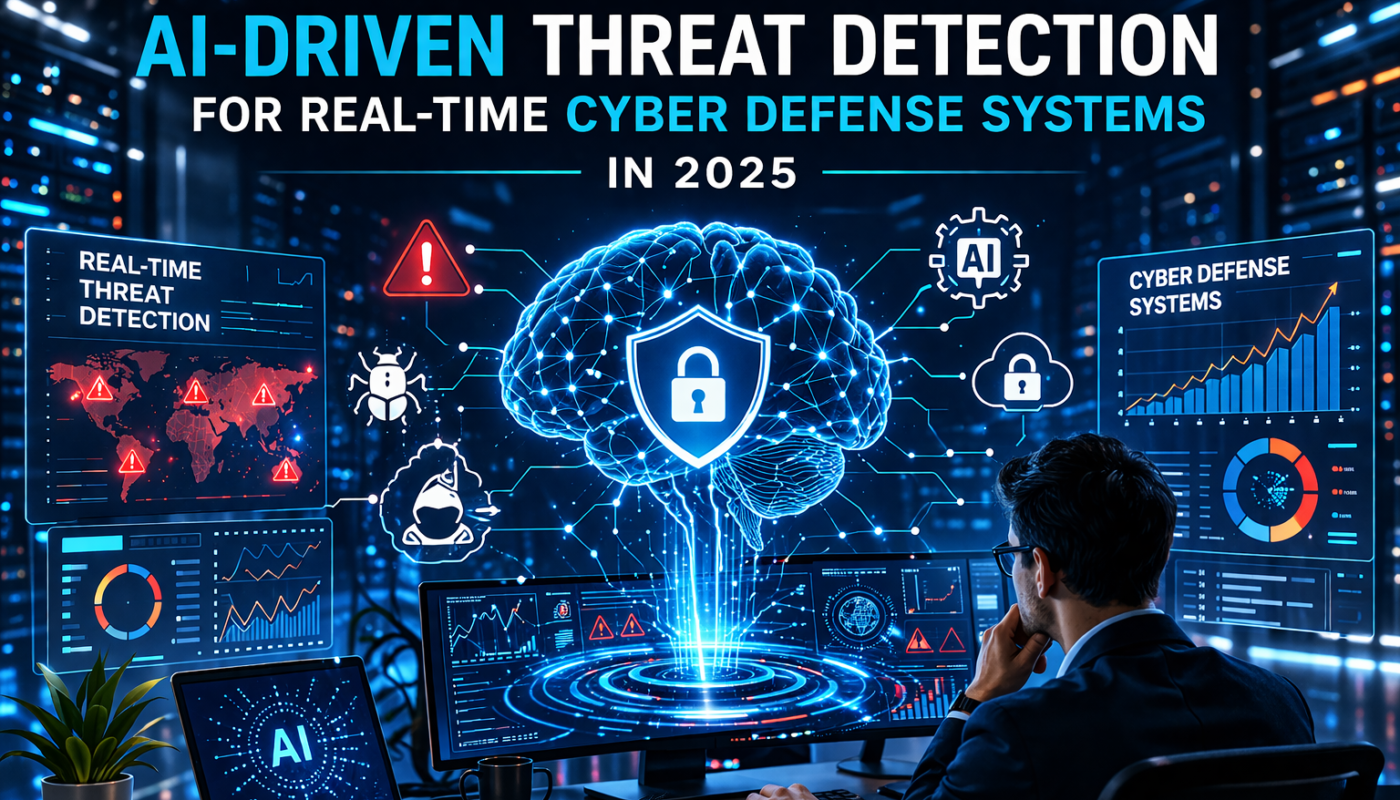
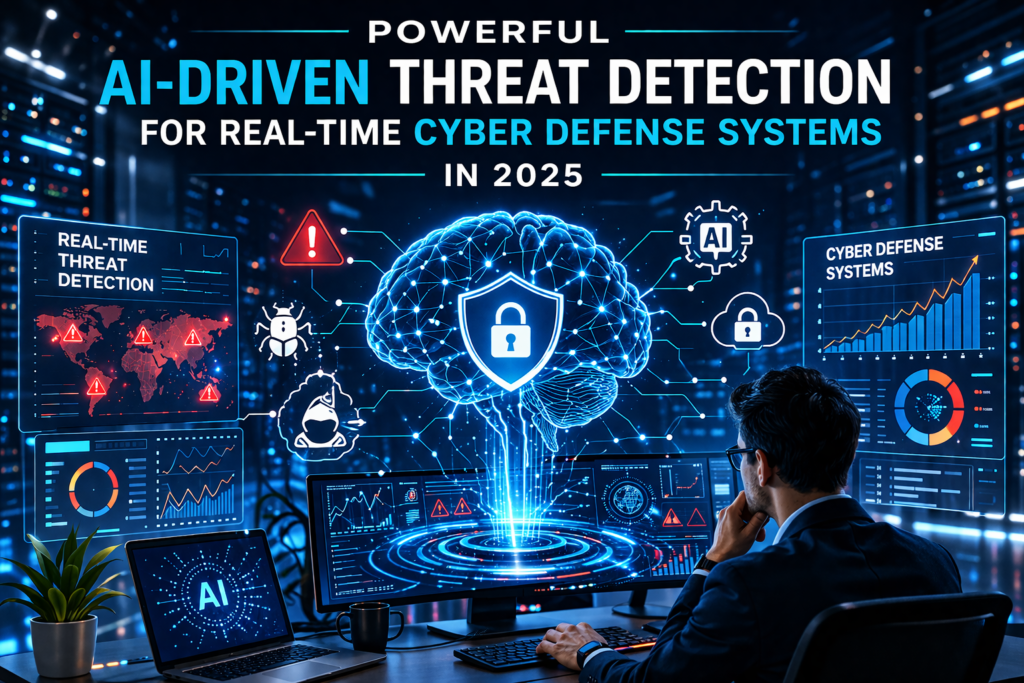
This is where Powerful AI-Driven Threat Detection for Real-Time Cyber Defense Systems in 2025 plays a transformative role. AI-powered cybersecurity systems use machine learning, behavioral analytics, and automation to detect, analyze, and respond to threats in real time.
Unlike conventional systems, AI-based cyber defense continuously learns from data patterns, adapts to new attack methods, and improves its detection accuracy over time. In this blog, we will explore how AI-driven threat detection works, its components, real-world applications, and its future impact on enterprise security.
What is AI-Driven Threat Detection?
AI-driven threat detection is an advanced cybersecurity approach that uses artificial intelligence technologies such as machine learning (ML), deep learning, and data analytics to identify malicious activities in digital environments.
Instead of relying on fixed rules, AI systems analyze large volumes of structured and unstructured data to detect anomalies and suspicious behavior.
Key Capabilities:
- Identifying unknown threats (zero-day attacks)
- Detecting anomalies in network traffic
- Monitoring user behavior in real time
- Predicting potential security breaches
This makes AI-driven systems far more efficient compared to traditional signature-based security tools.
Evolution of Cyber Defense Systems
Cyber defense systems have evolved significantly over the years:
Traditional Security Systems:
- Rule-based detection
- Manual monitoring
- High false-positive rates
- Slow response time
Modern AI-Based Security Systems:
- Automated threat detection
- Real-time monitoring
- Predictive analytics
- Self-learning algorithms
In 2025, enterprises are rapidly shifting toward AI-driven security frameworks because cybercriminals are also using advanced technologies like automation and AI for attacks.
Real-Time Threat Detection in Modern Enterprises
Real-time threat detection is one of the most powerful capabilities of AI-based cyber defense systems.
These systems continuously monitor:
- Network traffic behavior
- User authentication patterns
- Application activity logs
- Cloud environment interactions
How it works:
AI systems collect millions of data points every second and compare them with known behavioral baselines. If any abnormal activity is detected, the system immediately triggers an alert or automated response.
For example:
- A login attempt from an unusual country triggers a security alert
- Multiple failed login attempts trigger account lockout
- Suspicious file transfers are automatically blocked
This real-time capability helps prevent data breaches before they occur.
Machine Learning in Threat Detection
Machine learning is the backbone of AI-driven cybersecurity systems. According to the NIST Cybersecurity Framework, advanced detection systems are essential for handling evolving cyber threats effectively.
How Machine Learning Helps:
- Pattern Recognition
ML models analyze historical attack data to identify patterns of malicious behavior. - Anomaly Detection
Systems learn normal user behavior and detect deviations. - Predictive Security
AI predicts future attacks based on historical trends. - Continuous Improvement
The more data it processes, the more accurate it becomes.
Example:
If an employee normally logs in from India during office hours, but suddenly logs in from another country at midnight, the system flags it as suspicious activity.
Behavioral Analytics for Advanced Security
Behavioral analytics is a critical part of AI-driven threat detection systems.
Instead of only focusing on external threats, AI monitors internal user behavior.
Monitored Activities:
- Login patterns
- File access behavior
- Data download frequency
- Privilege escalation attempts
Benefits:
- Detect insider threats
- Identify compromised accounts
- Prevent unauthorized data access
Behavioral analytics ensures that even trusted users are continuously verified.
Automated Incident Response Systems
One of the biggest advantages of AI-driven cyber defense systems is automation.
Once a threat is detected, the system can automatically respond without human intervention.
Automated actions include:
- Blocking malicious IP addresses
- Disconnecting infected devices from the network
- Quarantining suspicious files
- Sending real-time alerts to security teams
- Rolling back system changes
Impact:
This reduces response time from minutes or hours to just seconds, significantly minimizing potential damage.
AI in Cloud Security and Enterprise Systems
With the rise of cloud computing, enterprises are moving their infrastructure to cloud platforms. This has increased the need for AI-driven cloud security solutions.
AI helps in:
- Monitoring cloud workloads
- Detecting misconfigurations
- Securing APIs and microservices
- Preventing unauthorized access to cloud storage
In hybrid and multi-cloud environments, AI ensures consistent security across all platforms.
Advantages of AI-Driven Threat Detection
Organizations using AI-powered cyber defense systems experience multiple benefits, as highlighted in IBM AI cybersecurity research.
1. Faster Threat Detection
AI identifies threats in milliseconds.
2. Reduced False Positives
Machine learning improves accuracy over time.
3. Cost Efficiency
Reduces need for large manual security teams.
4. Scalability
Works efficiently in large enterprise environments.
5. Continuous Monitoring
Provides 24/7 security coverage.
Challenges of AI-Based Cyber Defense Systems
Despite its advantages, AI cybersecurity also has challenges:
- High implementation cost
- Requirement of large datasets
- Risk of adversarial AI attacks
- Complexity in system integration
- Need for skilled professionals
However, enterprises are continuously investing in overcoming these challenges due to increasing cyber threats.
Future of AI in Cybersecurity
The future of cybersecurity is fully AI-driven.
Emerging trends include:
- Autonomous Security Operations Centers (SOC)
- AI-powered Zero Trust Architecture
- Predictive Threat Intelligence
- Self-healing security systems
- Fully automated incident response
By 2026, AI will not just assist cybersecurity teams but will become the primary decision-maker in threat detection and response systems.
Conclusion
Powerful AI-Driven Threat Detection for Real-Time Cyber Defense Systems in 2025 represents a major shift in modern cybersecurity. With the combination of machine learning, behavioral analytics, and automation, enterprises can now detect and respond to threats faster than ever before.
As cyber threats continue to evolve in 2026 and beyond, AI-powered defense systems will become essential for protecting sensitive data, ensuring compliance, and maintaining business continuity.




One thought on “Powerful AI-Driven Threat Detection for Real-Time Cyber Defense Systems in 2025”