
 by
by Introduction
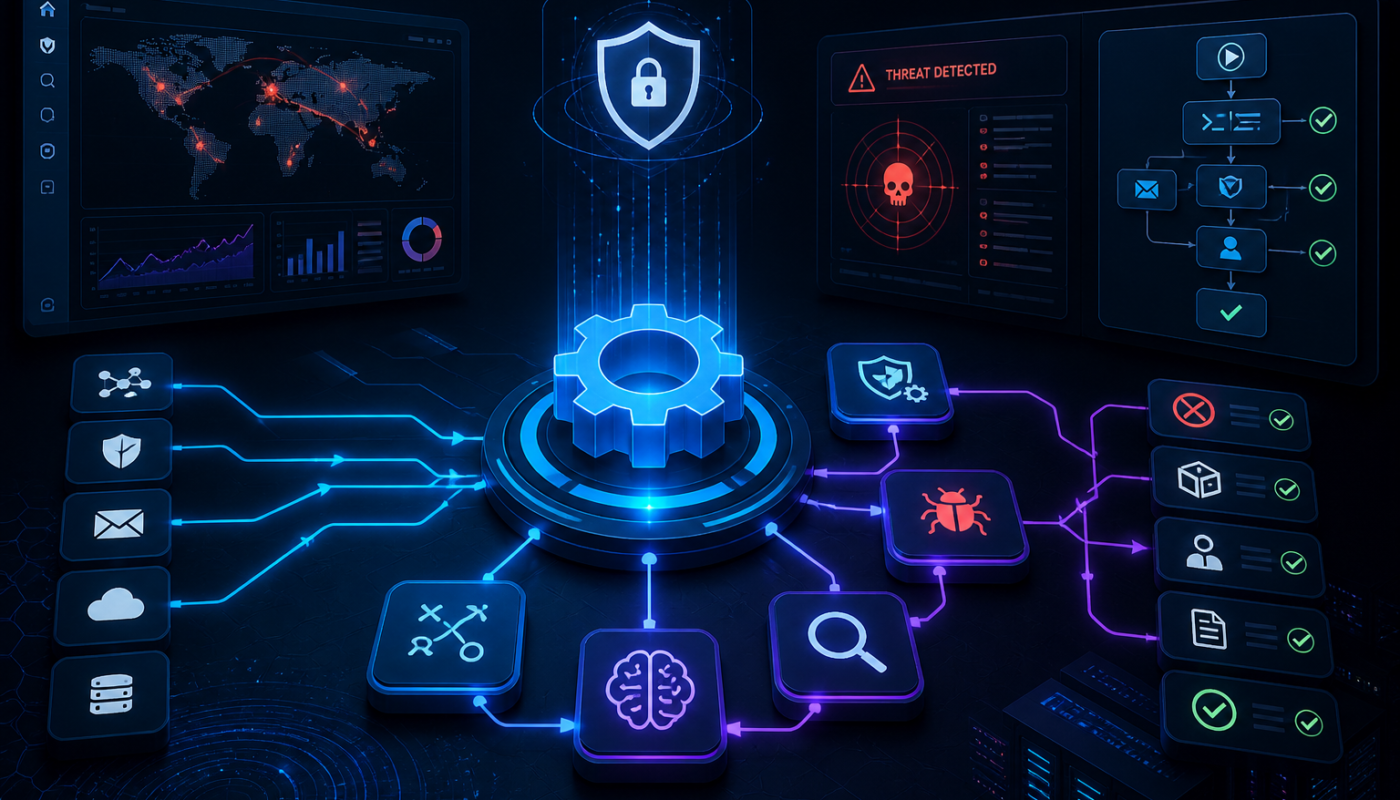
Modern cyber threats are becoming faster, more intelligent, and highly automated. Traditional Security Operations Centers (SOCs) that rely heavily on manual monitoring and response are no longer enough to handle today’s complex attack surface. Organizations are now shifting toward SOC automation techniques to improve detection speed, reduce human error, and strengthen overall cybersecurity posture.
SOC automation combines security tools, machine learning, orchestration platforms, and predefined workflows to detect and respond to threats in real time. This not only improves efficiency but also allows security teams to focus on high-value investigations instead of repetitive tasks.
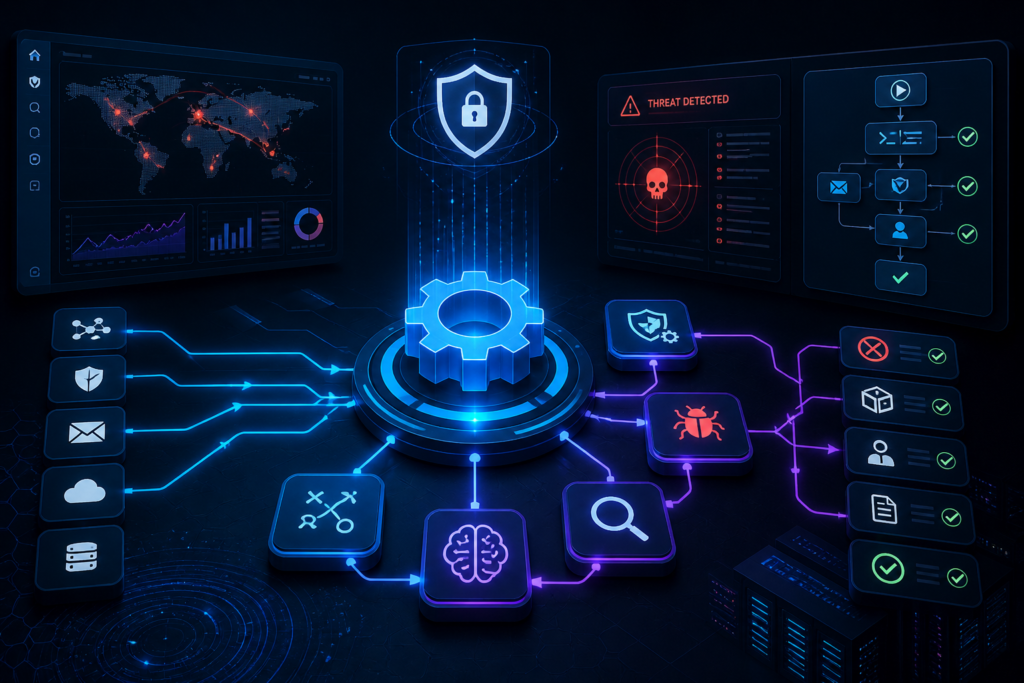
8 Powerful SOC Automation Techniques for Advanced Threat Detection
1. Security Information and Event Management (SIEM) Automation
Centralized Threat Intelligence and Log Analysis
SIEM automation is the backbone of any modern SOC environment. It collects, aggregates, and analyzes security logs from multiple sources such as servers, firewalls, endpoints, and cloud platforms. SIEM is one of the core SOC Automation Techniques used in enterprise security systems.
With automation, SIEM tools can:
- Correlate security events in real time
- Detect anomalies using predefined rules and AI models
- Trigger alerts automatically when suspicious behavior is detected
- Prioritize threats based on severity levels
This reduces the burden on analysts and ensures that critical threats are identified faster without manual log inspection.
2. Security Orchestration, Automation, and Response (SOAR)
Automated Incident Response Workflows
SOAR platforms are designed specifically to automate repetitive security operations. They connect multiple security tools and enable automated workflows for incident response. SOAR strengthens SOC Automation Techniques by enabling automated incident response.
Key capabilities include:
- Automatic incident ticket creation
- Threat enrichment from external intelligence sources
- Predefined playbooks for attack scenarios
- Automated containment actions like blocking IPs or isolating endpoints
SOAR significantly reduces response time from hours to seconds, making it one of the most effective SOC automation techniques.
3. Machine Learning-Based Threat Detection
AI-Powered Behavioral Analysis
Machine learning plays a crucial role in identifying unknown and zero-day threats. Instead of relying only on signature-based detection, ML models analyze behavior patterns. AI is transforming AI in cybersecurity by improving detection speed and accuracy.
It helps SOC teams by:
- Detecting abnormal user activity
- Identifying unusual network traffic patterns
- Predicting potential threats based on historical data
- Reducing false positives over time
This intelligent automation allows SOCs to detect sophisticated attacks that traditional tools might miss.
4. Automated Threat Intelligence Integration
Real-Time Global Threat Feeds
Threat intelligence automation ensures that SOC systems are always updated with the latest global threat data.
Automation helps by:
- Continuously importing threat feeds from multiple sources
- Matching indicators of compromise (IOCs) with internal logs
- Automatically blocking malicious domains or IPs
- Enriching alerts with contextual information
This improves situational awareness and allows faster decision-making during security incidents.
5. Endpoint Detection and Response (EDR) Automation
Real-Time Endpoint Monitoring and Action
Endpoints are one of the most targeted areas in cyberattacks. EDR automation helps monitor and protect endpoints in real time. Endpoint protection is a key part of endpoint security solutions in modern SOC environments.
With automation, EDR systems can:
- Detect malware and ransomware activities instantly
- Automatically isolate infected devices
- Kill malicious processes without human intervention
- Roll back system changes after an attack
This ensures faster containment of threats at the endpoint level before they spread across the network.
6. User and Entity Behavior Analytics (UEBA)
Detecting Insider and Advanced Persistent Threats
UEBA uses automation and analytics to monitor behavior patterns of users and devices within a network.
UEBA enhances SOC Automation Techniques by detecting abnormal user behavior patterns.
It helps SOC teams by:
- Establishing normal behavior baselines
- Detecting deviations such as unusual login times or locations
- Identifying insider threats and compromised accounts
- Highlighting privilege misuse activities
UEBA is especially effective in detecting slow and stealthy attacks that bypass traditional security tools.
7. Automated Phishing Detection and Response
Email Security Automation at Scale
Phishing remains one of the most common attack vectors. SOC automation can significantly improve detection and response to phishing attempts.
Automation capabilities include:
- Scanning incoming emails for malicious links and attachments
- Automatically quarantining suspicious emails
- Analyzing sender reputation and domain authenticity
- Simulating phishing attacks for employee training
This reduces human dependency in email threat analysis and strengthens organizational awareness.
8. Automated Vulnerability Management
Continuous Security Risk Reduction
Vulnerability management automation ensures continuous scanning and remediation of system weaknesses.
It includes:
- Automated vulnerability scanning across infrastructure
- Prioritization based on risk level and exploitability
- Integration with patch management systems
- Auto-generation of remediation tasks
By automating vulnerability detection, SOC teams can proactively fix security gaps before attackers exploit them.
Benefits of SOC Automation Techniques
SOC Automation Techniques provide faster detection and improved security efficiency.
- Faster threat detection and response
- Reduced workload for security analysts
- Lower operational costs
- Improved accuracy with fewer false positives
- Enhanced visibility across IT environments
- Better compliance with security standards
Challenges in SOC Automation
- High initial setup and integration complexity
- Dependency on quality data and configurations
- Risk of automation errors if not properly tuned
- Need for skilled cybersecurity professionals
- Continuous maintenance and updates required
Future of SOC Automation
The future of SOC automation is driven by advanced AI, predictive analytics, and autonomous security systems. Emerging trends include:
- Fully autonomous SOC environments
- AI-driven threat hunting
- Self-healing security systems
- Integration of quantum-safe encryption methods
- Hyper-automation across cybersecurity ecosystems
As cyber threats continue to evolve, SOC automation will become a necessity rather than an option.
Conclusion
SOC automation techniques are revolutionizing the way organizations detect and respond to cyber threats. From SIEM and SOAR platforms to machine learning and UEBA, automation enables faster, smarter, and more efficient security operations.
By implementing these 8 powerful SOC automation techniques for advanced threat detection, enterprises can significantly strengthen their cybersecurity defenses and stay ahead of modern cyber threats.
A well-automated SOC is not just a security upgrade—it is a strategic necessity in today’s digital landscape.