 by
by Introduction
Modern applications require faster, flexible, and efficient data communication between frontend and backend systems. Traditional REST APIs have powered applications for years, but as application complexity grows, data-fetching inefficiencies become a major challenge. Over-fetching and under-fetching data can slow down applications, increase server load, and reduce user experience.
This is where GraphQL API Development becomes a game-changing solution. GraphQL allows clients to request only the exact data they need, improving speed, reducing bandwidth usage, and making APIs more efficient.
As businesses build complex web applications, mobile platforms, SaaS products, and microservices ecosystems, GraphQL is becoming an essential backend technology.
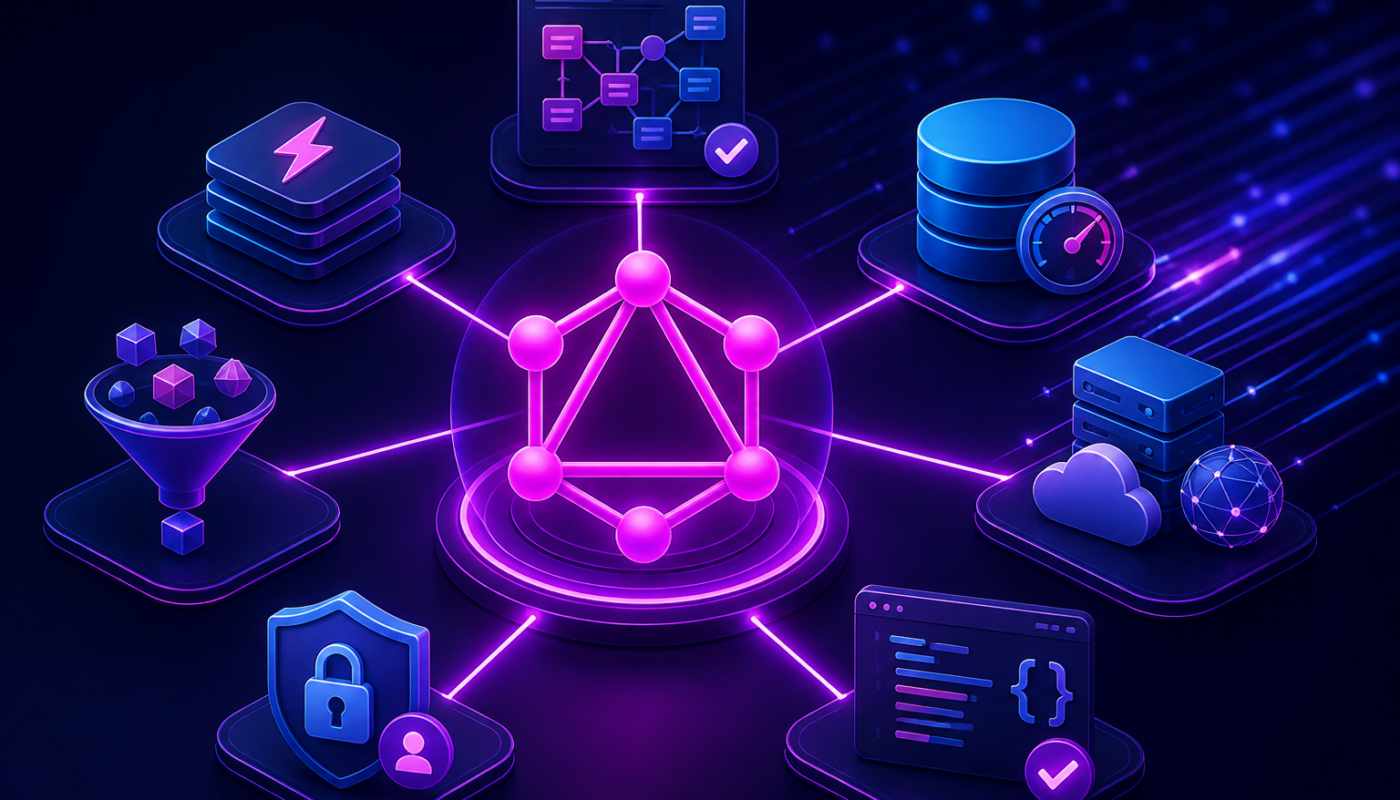
In this complete guide, you will learn powerful GraphQL API development strategies, architecture principles, optimization techniques, security best practices, and implementation methods for faster data delivery.
What is GraphQL API Development?
GraphQL API development is a query-based API architecture that allows clients to request specific data through a single endpoint.
Unlike REST APIs where multiple endpoints return fixed responses, GraphQL provides flexible querying.
Key benefits include:
Precise data fetching
Clients request exactly what they need.
Faster responses
Reduces unnecessary data transfer.
Better frontend flexibility
Frontend teams can control data requirements.
Strong type system
Improves API reliability.
How GraphQL Works
GraphQL follows a schema-driven architecture.
Basic workflow:
Client sends query
The client requests specific fields.
Example:
Requesting user profile:
- Name
- Orders
GraphQL server processes query
The server validates and resolves requested fields.
Resolver fetches data
Resolvers connect to databases or services.
Response returned
Only requested data is returned.
Core Components of GraphQL API Development
Schema
Schema defines data structure.
It specifies:
- Types
- Queries
- Mutations
- Subscriptions
Resolvers
Resolvers handle data fetching logic.
Each field has its own resolver.
Queries
Used for fetching data.
Read operations use queries.
Mutations
Used for data modification.
Examples:
- Create user
- Update profile
- Delete record
Subscriptions
Used for real-time updates. Backend queue management improves GraphQL event delivery for real-time subscription systems.
Best for:
- Live notifications
- Chat apps
- Real-time dashboards
Why GraphQL API Development Matters
Modern applications require better API performance.
GraphQL solves major REST limitations.
Reduces Over-Fetching
REST often returns extra data.
GraphQL avoids unnecessary responses.
Reduces Under-Fetching
REST may require multiple API calls.
GraphQL solves this through single-query requests.
Improves Performance
Smaller payloads improve speed.
Benefits:
- Lower latency
- Faster rendering
- Better user experience
Better Developer Experience
Strong documentation and schema introspection improve development.
7 Powerful GraphQL API Development Strategies
Design a Strong Schema First
Schema is the foundation.
Best practices:
Keep schema simple
Avoid unnecessary complexity.
Use clear naming conventions
Maintain readability.
Separate types properly
Improve scalability.
Implement Efficient Resolvers
Resolvers directly affect performance.
Best practices:
Minimize database calls
Avoid repeated queries.
Batch requests
Reduce load.
Use caching
Improve speed.
Use Query Optimization
Efficient query design improves API speed.
Optimization methods:
Limit nested queries
Prevent deep query complexity.
Use pagination
Reduce payload size.
Filter unnecessary fields
Improve performance.
Implement Authentication and Authorization
Security is critical.
Strong API security helps protect GraphQL endpoints from unauthorized access and data exposure.
Protect:
- User data
- Admin operations
- Sensitive resources
Best methods:
JWT authentication
Secure user sessions.
Role-based access
Control permissions.
Use GraphQL Caching Strategies
Caching improves speed and scalability.
Types:
Resolver caching
Cache database results.
CDN caching
Reduce server requests.
Client-side caching
Improve user experience.
Implement Rate Limiting
Protect APIs from abuse.
Effective rate limiting controls excessive API requests and protects GraphQL servers from abuse and performance issues.
Benefits:
- Prevent attacks
- Control traffic
- Protect resources
Monitor API Performance
Monitoring helps maintain performance.
Track:
- Query speed
- Errors
- Traffic patterns
- Resource usage
GraphQL vs REST API
| Feature | GraphQL | REST |
| Endpoint Count | Single | Multiple |
| Data Fetching | Flexible | Fixed |
| Over-Fetching | No | Yes |
| Under-Fetching | No | Yes |
| Performance | Better | Moderate |
| Versioning | Easier | Complex |
Best Use Cases for GraphQL
Mobile Applications
Optimized for low-bandwidth environments.
Web Applications
Improves frontend flexibility.
Microservices Systems
Combines multiple services into one API layer.
SaaS Platforms
Supports scalable multi-user environments.
Real-Time Applications
Subscriptions enable live data.
Challenges in GraphQL API Development
Complex Query Attacks
Deep queries can overload servers.
Solution:
Set query depth limits.
Caching Complexity
GraphQL caching is harder than REST.
Solution:
Use advanced caching tools.
Learning Curve
Requires understanding schemas and resolvers.
Solution:
Use documentation and testing tools.
Security Risks
Improper access control creates vulnerabilities.
Solution:
Implement strong authorization.
Best Practices for GraphQL API Development
Validate Queries
Prevent invalid requests.
Limit Query Depth
Protect server performance.
Use Error Handling
Provide structured error responses.
Optimize Database Access
Use batching tools like DataLoader.
Implement Logging
Track API behavior.
Future Trends in GraphQL API Development
GraphQL Federation
Supports distributed APIs.
Best for microservices.
AI-Powered API Optimization
AI improves resolver efficiency.
Edge GraphQL APIs
Faster global API delivery.
Real-Time GraphQL Growth
Subscriptions becoming more important.
How to Choose GraphQL for Your Project
Consider GraphQL if:
Your frontend needs flexible data
GraphQL provides exact data control.
You want faster API performance
Optimized payloads improve speed.
Your application is growing
GraphQL scales efficiently.
You use multiple frontend platforms
One API supports all platforms.
Common Mistakes to Avoid
Poor schema design
Creates long-term issues.
Ignoring security
Exposes data risks.
Deep nested queries
Hurts performance.
No performance monitoring
Reduces optimization opportunities.
Conclusion
GraphQL API Development is transforming modern backend systems by providing flexible, efficient, and scalable data communication. Unlike traditional REST APIs, GraphQL improves speed by allowing precise data fetching, reducing over-fetching and under-fetching problems.
By implementing strong schema design, optimized resolvers, caching, authentication, and performance monitoring, businesses can build high-performance APIs for web, mobile, SaaS, and enterprise systems.
As API complexity grows in 2025, GraphQL will continue to be one of the most important backend technologies for faster and smarter data delivery.