
 by
by Introduction
Cloud computing in 2025 has become the backbone of modern digital infrastructure. From startups to global enterprises, almost every organization depends on cloud platforms for data storage, application hosting, AI processing, and business operations. The evolution of cloud technology is no longer just about storing data online—it now focuses on intelligent automation, high-level security, real-time scalability, and AI-powered infrastructure. Cloud compting in 2025 is driving innovation in modern digital infrastructure.
In this blog, we will explore how cloud computing is shaping the future in 2025 across three major pillars:
- Data Storage
- Security
- Scalability
Evolution of Cloud Computing in 2025
The rise of Cloud compting in 2025 marks the shift toward AI-driven, edge-integrated, and security-first cloud systems. Cloud computing has moved through several phases:
- Cloud 1.0: Basic storage and hosting services
- Cloud 2.0: SaaS, PaaS, and multi-cloud adoption
- Cloud 3.0 (2025 era): AI-driven, edge-integrated, security-first infrastructure
In 2025, cloud is not just a technology—it is a business strategy that drives innovation, cost optimization, and global scalability.
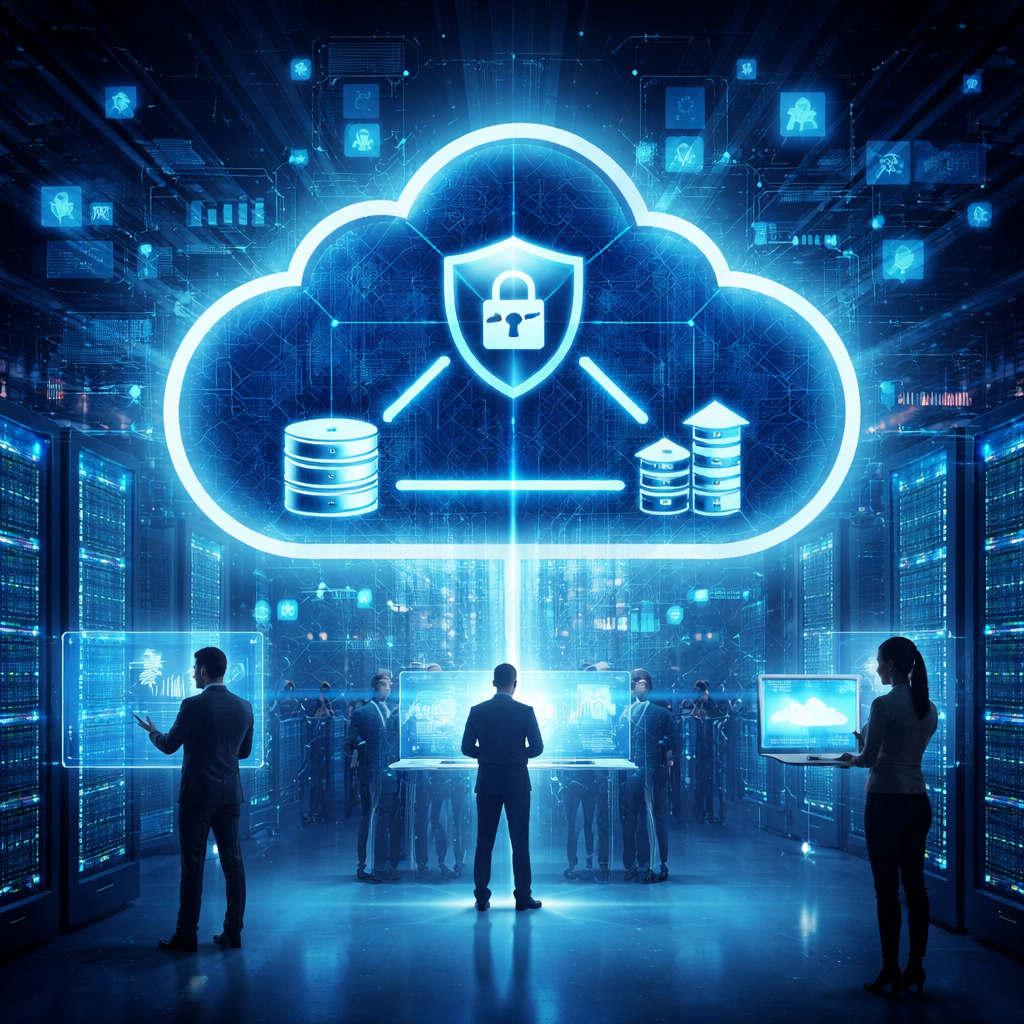
Future of Data Storage in Cloud Computing
Multi-Cloud Storage Systems
Cloud compting in 2025 enables multi-cloud and AI-powered storage systems for better efficiency and performance. Organizations are no longer dependent on a single provider. Modern enterprises rely on Cloud compting in 2025 for scalable and secure data storage solutions. This shift in Cloud compting in 2025 is improving performance and scalability worldwide. Instead, they use multi-cloud storage systems like AWS, Azure, and Google Cloud together for:
- Better performance
- Reduced vendor lock-in
- Improved disaster recovery
Edge-Based Storage
With billions of IoT devices generating data, cloud systems are integrating edge computing, where data is processed closer to the source to reduce delay and bandwidth usage.
AI-Powered Data Management
AI is now used to:
- Automatically categorize data
- Optimize storage usage
- Predict storage demand
- Detect anomalies in datasets
Cloud Data Lakes & Warehouses
Businesses use centralized data lakes to store:
- Structured data
- Unstructured data
- Real-time streaming data
This helps in advanced analytics and machine learning models.
Future of Cloud Security
Security in Cloud compting in 2025 is powered by zero trust architecture and AI-based threat detection systems. Security is one of the biggest priorities in cloud computing today due to increasing cyberattacks and data breaches.Cybersecurity strategies in Cloud compting in 2025 are evolving with AI and zero trust models.Overall, Cloud compting in 2025 will define the future of global digital systems.
Security in Cloud compting in 2025 is now driven by AI-based threat detection.
Zero Trust Security Model
In 2025, organizations follow a “never trust, always verify” approach:
- Every user is authenticated
- Every device is verified
- Continuous monitoring is applied
AI-Driven Cybersecurity
AI is widely used to:
- Detect suspicious activity in real time
- Prevent ransomware attacks
- Identify vulnerabilities automatically
Confidential Computing
Advanced technologies like Trusted Execution Environments (TEE) protect data even during processing, ensuring maximum privacy and security.
Data Compliance & Regulations
Companies must comply with:
- GDPR (Europe)
- HIPAA (Healthcare)
- India DPDP Act (Data Protection)
Future of Scalability in Cloud Computing
Scalability is one of the biggest advantages of cloud computing and is becoming even more powerful in 2025.
Auto-Scaling Systems
Cloud platforms automatically:
- Increase server capacity during traffic spikes
- Reduce resources during low usage
This ensures cost efficiency + performance stability.
Serverless Architecture
Developers now build applications without managing servers:
- Pay only for usage
- Instant scaling
- Faster deployment
Containerization & Kubernetes
Tools like Docker and Kubernetes help:
- Deploy applications faster
- Manage workloads efficiently
- Scale microservices automatically
Global Distributed Infrastructure
Cloud providers now use global data centers to ensure:
- Low latency worldwide
- High availability
- Fault tolerance
Key Technologies Driving Cloud
Cloud computing growth is powered by several advanced technologies:
- Artificial Intelligence (AI)
- Machine Learning (ML)
- Edge Computing
- Internet of Things (IoT)
- Quantum Computing (early adoption stage)
- Blockchain integration
These technologies make cloud systems smarter and more efficient.
Major Benefits of Cloud Computing
Cost Efficiency
Pay only for what you use.
High Scalability
Resources can scale instantly based on demand.
Strong Security
Advanced encryption + AI monitoring systems.
Global Accessibility
Access data from anywhere in the world.
Faster Innovation
Businesses can launch products faster with cloud tools.
Challenges of Cloud Computing
Despite its advantages, cloud computing still faces challenges:
- Data privacy risks
- High cloud costs if unmanaged
- Vendor lock-in issues
- Complex multi-cloud management
- Cybersecurity threats
Future Trends Beyond 2025
Looking ahead, cloud computing will continue to evolve:
- AI-native cloud platforms
- Quantum computing services
- Fully autonomous cloud systems
- Green cloud (eco-friendly data centers)
- Decentralized cloud networks
Conclusion
In conclusion, Cloud compting in 2025 will dominate the future of digital technology. Cloud computing in 2025 is no longer just about storage—it is a complete digital ecosystem that powers AI, analytics, global applications, and enterprise infrastructure.Cloud compting in 2025 will continue to shape the future of digital ecosystems with smarter storage, stronger security, and unlimited scalability.
The future of cloud lies in:
- Smarter data storage systems
- Strong AI-driven security
- Infinite scalability through automation
Businesses that adopt cloud innovation early will stay ahead in the digital economy.


10 thoughts on “Cloud Computing in 2025: Future of Data Storage, Security & Scalability”