

 by
by Introduction
In 2025, cybersecurity threats are evolving at an unprecedented pace, forcing organizations to rethink their security strategies. Traditional security tools are no longer capable of handling the complexity and scale of modern cyberattacks. This is where SIEM (Security Information and Event Management) systems have evolved into advanced, intelligent security platforms. SIEM Evolution in 2025 is becoming critical for enterprise cybersecurity.
The SIEM Evolution in 2025 focuses on real-time security monitoring, automated threat detection, and faster incident response. Modern SIEM solutions are now powered by Artificial Intelligence, machine learning, and cloud-based analytics, making them a critical component of enterprise cybersecurity.
Organizations today require continuous visibility into their IT infrastructure, and SIEM systems provide that by collecting, analyzing, and correlating security data across multiple sources.

What is SIEM?
SIEM (Security Information and Event Management) is a cybersecurity solution that collects and analyzes log data from various systems such as servers, networks, applications, and endpoints.
Key functions include:
- Log management
- Event correlation
- Threat detection
- Incident response
Modern SIEM tools go beyond basic monitoring and provide intelligent insights into potential security threats.
Why SIEM is Important in 2025
With the increase in cyber threats, businesses need advanced monitoring systems. SIEM plays a crucial role by:
- Providing real-time visibility into systems
- Detecting suspicious activities instantly
- Ensuring compliance with security standards
- Reducing response time to incidents
Without SIEM, organizations may fail to detect attacks until it is too late.
Evolution of SIEM Systems
The SIEM Evolution in 2025 shows a shift from traditional to AI-powered systems.
Traditional SIEM
Earlier SIEM systems were:
- Rule-based
- Dependent on manual analysis
- Slow in detecting threats
They required constant updates and human intervention.
Modern SIEM (2025)
Today’s SIEM systems are:
- AI-powered
- Cloud-integrated
- Automated
- Scalable
They provide faster and more accurate threat detection.
Key Features of SIEM Evolution in 2025
Real-Time Security Monitoring
Modern SIEM systems continuously monitor network activity and detect anomalies instantly. This helps organizations respond to threats before they escalate.
Automated Threat Response
Automation allows SIEM systems to:
- Block suspicious IPs
- Isolate infected devices
- Trigger alerts automatically
AI and Machine Learning Integration
AI helps SIEM systems analyze patterns and predict threats, improving detection accuracy.
Cloud-Based SIEM
Cloud SIEM provides:
- Scalability
- Remote access
- Cost efficiency
Advanced Analytics
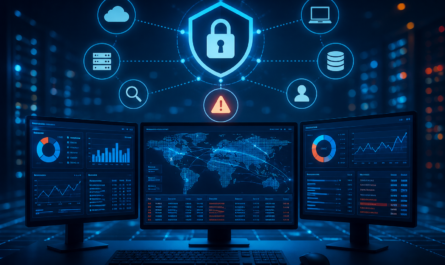
SIEM tools now offer dashboards and reports that provide deep insights into security events.
How SIEM Detects Cyber Threats
SIEM systems use multiple techniques:
Log Collection
Log Data is collected from:
- Firewalls
- Servers
- Applications
- Network devices
Event Correlation
SIEM correlates events from different sources to identify suspicious patterns.
Behavioral Analysis
Identifies unusual user or system behavior.
Threat Intelligence Integration
SIEM systems use global threat data to detect known and emerging threats.
Benefits of Modern SIEM Systems
Enhanced Security
Detects both known and unknown threats.
Faster Response Time
Real-time alerts help reduce damage.
Better Visibility
Provides centralized monitoring of all systems.
Cost Savings
Reduces financial losses from cyberattacks.
Scalability
Adapts to growing business needs.
Comparison Table: Traditional SIEM vs Modern SIEM
| Feature | Traditional SIEM | Modern SIEM |
| Detection Method | Rule-based | AI & Machine Learning |
| Response Time | Slow | Real-time |
| Automation | Limited | Fully automated |
| Scalability | Low | High (Cloud-based) |
| Accuracy | Moderate | High |
| Threat Detection | Known threats only | Known + Unknown threats |
Challenges in SIEM Implementation
High Initial Cost
Setting up SIEM can be expensive.
Complex Configuration
Requires skilled professionals.
Data Overload
Large volumes of data can be difficult to manage.
False Positives
Too many alerts can overwhelm security teams.
Best Practices for SIEM Implementation
- Use AI-powered SIEM solutions
- Regularly update security rules
- Integrate with other security tools
- Monitor logs continuously
- Train security teams
Future of SIEM in Cybersecurity
The SIEM Evolution in 2025 will continue to shape automated threat response. The future of SIEM is highly promising. By 2025 and beyond:
- SIEM will become fully automated
- AI-driven threat prediction will improve
- Integration with Zero Trust models will increase
- Real-time analytics will become standard
Organizations adopting advanced SIEM solutions will have a strong defense against cyber threats.
FAQs
1. What is SIEM used for?
SIEM is used for monitoring, detecting, and responding to cybersecurity threats in real time.
2. How does SIEM improve security?
It provides centralized visibility and faster threat detection, reducing risks.
3. Is SIEM suitable for small businesses?
Yes, cloud-based SIEM solutions are scalable and affordable for small businesses.
4. What is the difference between SIEM and traditional security tools?
SIEM provides real-time monitoring and advanced analytics, while traditional tools rely on basic detection methods.
Conclusion
The SIEM Evolution in 2025 marks a significant shift in how organizations handle cybersecurity. With real-time monitoring, automation, and AI integration, SIEM systems have become more powerful and efficient than ever before.
Businesses that invest in modern SIEM solutions can significantly improve their security posture, reduce risks, and respond to threats faster. As cyberattacks continue to evolve, SIEM will remain a key component of enterprise security strategies.


6 thoughts on “Advanced SIEM Evolution in 2025: Real-Time Security Monitoring and Automated Threat Response”