
 by
by Introduction
Advanced Network Segmentation Techniques are becoming essential for modern enterprise cybersecurity due to increasing cloud and hybrid infrastructure risks. Organizations are no longer operating within simple on-premise networks. Instead, modern infrastructures now include cloud platforms, hybrid environments, remote endpoints, SaaS applications, APIs, and IoT devices—all interconnected and constantly communicating.
This expansion has made traditional “flat networks” highly insecure. In a flat architecture, once an attacker gains access to one system, they can easily move laterally across the entire network, accessing sensitive data and critical systems without major resistance.
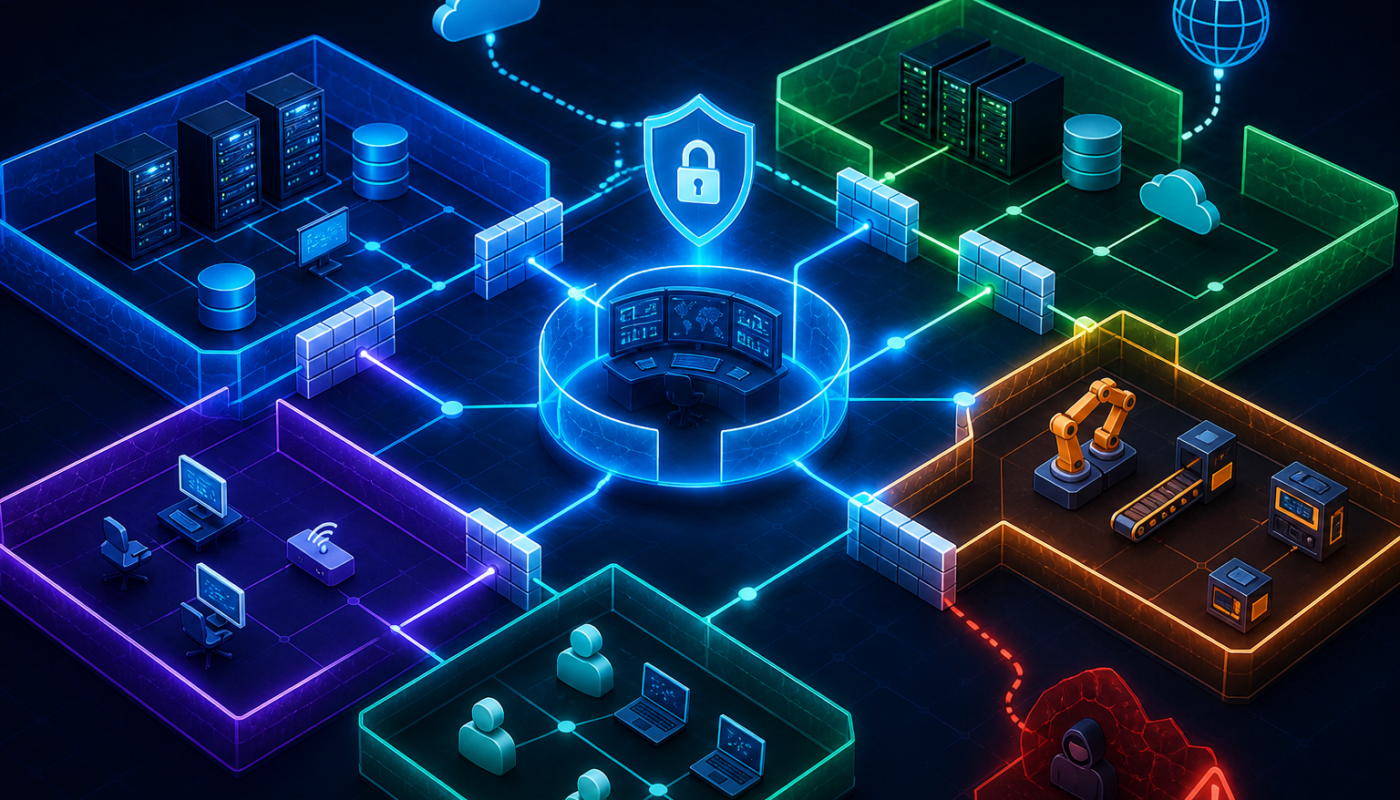
To solve this problem, enterprises are increasingly adopting advanced network segmentation techniques. Network segmentation divides a large network into smaller, isolated security zones, each with its own rules and access controls. This limits unauthorized movement, reduces attack surfaces, and improves visibility across the environment.
In 2025, segmentation is no longer just a network design strategy—it is a core cybersecurity requirement aligned with Zero Trust principles, AI-driven monitoring, and cloud-native security architectures.
What is Network Segmentation in Enterprise Security?
Network segmentation is the process of dividing a large IT network into multiple smaller segments or zones. Each segment operates as a controlled environment with strict access rules.
Instead of allowing unrestricted communication between all systems, segmentation ensures that only approved users, devices, and applications can communicate with specific resources.
Key Objectives of Network Segmentation:
- Reduce the attack surface
- Prevent lateral movement of threats
- Protect critical systems and sensitive data
- Improve compliance with security standards
- Enhance monitoring and threat detection
Advanced Network Segmentation Techniques for Enterprise Security
1. Micro-Segmentation for Granular Control
Micro-segmentation is one of the most powerful modern security techniques. It divides networks into very small security zones, sometimes down to individual workloads or applications.
Unlike traditional segmentation, which protects entire subnets, micro-segmentation focuses on workload-level isolation.
This means that even if an attacker compromises one virtual machine or container, they cannot move to other systems without authorization.
Micro-segmentation is one of the most important Advanced Network Segmentation Techniques used in cloud environments.
2. Zero Trust Network Segmentation
Zero Trust segmentation is based on the principle: “Never trust, always verify.”
In this model, no user, device, or application is trusted by default—even if it is inside the network perimeter.
Every access request is:
- Authenticated
- Authorized
- Continuously monitored
This approach eliminates implicit trust and significantly reduces risks from insider threats, stolen credentials, and compromised endpoints. Zero Trust is strongly aligned with Advanced Network Segmentation Techniques to eliminate implicit trust in networks.
Zero Trust segmentation is now considered the foundation of modern enterprise security architecture.
3. Identity-Based Segmentation
Identity-based segmentation replaces traditional IP-based rules with identity-driven access control. Identity-based security is a key part of Advanced Network Segmentation Techniques in modern enterprises.
Instead of allowing or blocking traffic based on network addresses, access decisions are made using:
- User identity
- Role or department
- Device type and security posture
- Authentication status
For example, a finance employee can access financial systems but is automatically restricted from engineering or infrastructure environments.
This approach integrates well with identity providers, SSO systems, and multi-factor authentication frameworks.
4. Application-Aware Segmentation
Application-aware segmentation focuses on controlling traffic based on application behavior rather than network location.
It understands how applications communicate internally and externally, including APIs, microservices, and backend systems.
This allows security teams to define rules such as:
- Which applications can communicate with each other
- Which APIs are allowed to exchange data
- Which services are restricted based on behavior patterns
It is especially important in modern cloud-native and microservices-based architectures.
5. Software-Defined Segmentation (SDN-Based)
Software-Defined Networking (SDN) enables centralized and programmable control over network segmentation. Software-defined networking strengthens Advanced Network Segmentation Techniques with centralized control.
Instead of manually configuring each network device, administrators can define policies in a centralized controller that automatically enforces segmentation rules across the entire infrastructure.
Benefits include:
- Faster deployment of security policies
- Reduced configuration errors
- High scalability for large enterprises
- Real-time policy updates
SDN-based segmentation is essential for large-scale enterprise environments and data centers.
6. Dynamic Policy-Based Segmentation
Dynamic segmentation adjusts access rules in real time based on contextual information.
It evaluates factors such as:
- User behavior patterns
- Device health and compliance status
- Location and geographic risk
- Time of access
- Threat intelligence signals
If unusual activity is detected—such as login from a new country or suspicious device behavior—access can be automatically restricted or isolated.
This adaptive approach makes segmentation much more intelligent and responsive compared to static rule-based systems.
7. Cloud-Native Segmentation
With enterprises increasingly adopting multi-cloud strategies, cloud-native segmentation has become essential. Cloud environments require Advanced Network Segmentation Techniques to manage distributed infrastructure securely. Strengthen architecture alignment with Cloud Security Best Practices for Enterprise Environments.
Cloud providers offer built-in segmentation tools such as:
- Virtual Private Clouds (VPCs)
- Security groups and network ACLs
- Kubernetes network policies
- Service mesh security controls
These tools allow organizations to enforce segmentation consistently across cloud environments like AWS, Azure, and Google Cloud.
Cloud-native segmentation ensures security policies remain consistent even when workloads move across different environments.
8. AI-Driven Network Segmentation
Artificial Intelligence is transforming how network segmentation is managed and optimized. AI enhances Advanced Network Segmentation Techniques by detecting threats in real time. Enhance detection and response capabilities with SOC Automation Techniques for Advanced Threat Detection.
AI-driven segmentation systems can:
- Analyze traffic patterns in real time
- Detect anomalies and suspicious behavior
- Predict potential attack paths
- Automatically adjust segmentation rules
This reduces manual workload for security teams and improves response time during cyber incidents.
AI also helps identify misconfigurations and hidden vulnerabilities in segmentation policies.
Benefits of Advanced Network Segmentation
Advanced segmentation provides several critical advantages for enterprise security:
- Significantly reduces attack surface
- Prevents lateral movement of attackers
- Limits the impact of breaches
- Improves compliance with regulatory frameworks like GDPR, ISO 27001, and NIST
- Enhances visibility into internal network traffic
- Strengthens Zero Trust security implementation
- Improves incident response capabilities
Challenges in Implementation
One of the biggest challenges in adopting Advanced Network Segmentation Techniques is managing complexity in hybrid cloud environments.
Despite its benefits, implementing advanced segmentation can be challenging:
- Complexity in large-scale enterprise environments
- Integration issues with legacy systems
- Misconfiguration risks leading to service disruptions
- Managing policies across hybrid and multi-cloud infrastructures
- Requirement for skilled cybersecurity professionals
- Continuous monitoring and maintenance overhead
Proper planning and automation are essential to overcome these challenges.
Best Practices for Enterprise Deployment
Organizations implementing Advanced Network Segmentation Techniques 2025 should follow least privilege access principles for maximum security.
To successfully implement network segmentation, enterprises should follow these best practices:
- Start by securing critical assets such as databases and financial systems
- Implement Zero Trust principles across all layers
- Use automation tools for policy enforcement
- Continuously monitor network traffic using SIEM solutions
- Regularly audit segmentation rules and update them
- Apply least privilege access for all users and systems
- Combine segmentation with endpoint security and identity management
Future of Network Segmentation
The future of cybersecurity strongly depends on Advanced Network Segmentation Techniques across all enterprise systems.
Emerging trends include:
- AI-powered self-healing networks
- Fully automated Zero Trust enforcement
- Cybersecurity mesh architecture integration
- Real-time adaptive segmentation across hybrid environments
- Predictive threat-based segmentation models
In the coming years, segmentation will become less manual and more autonomous, driven by machine learning and real-time analytics.
Conclusion
Advanced network segmentation is now a fundamental requirement for enterprise cybersecurity in 2025. As cyber threats become more sophisticated and infrastructures become more distributed, traditional security models are no longer sufficient.
By adopting techniques such as micro-segmentation, Zero Trust architecture, identity-based controls, cloud-native segmentation, and AI-driven automation, organizations can significantly strengthen their security posture.
Effective segmentation not only protects critical assets but also ensures resilience, compliance, and operational efficiency in modern digital environments.Organizations must adopt Advanced Network Segmentation Techniques to stay protected against evolving cyber threats.




One thought on “Advanced Network Segmentation Techniques for Enterprise Security in 2025”