 by
by Introduction
Cloud environments in 2025 are no longer static infrastructure—they are dynamic, containerized, multi-cloud ecosystems running thousands of workloads simultaneously. With this complexity, traditional perimeter-based security is no longer enough.
This is where Cloud Workload Protection in 2025 becomes critical. It focuses on securing workloads (VMs, containers, Kubernetes pods, serverless functions) during runtime against evolving cyber threats like malware injection, privilege escalation, and lateral movement attacks.
Modern attackers don’t break in—they log in, move laterally, and exploit runtime vulnerabilities. That’s why runtime security has become the backbone of cloud defense strategies.
What is Cloud Workload Protection ?
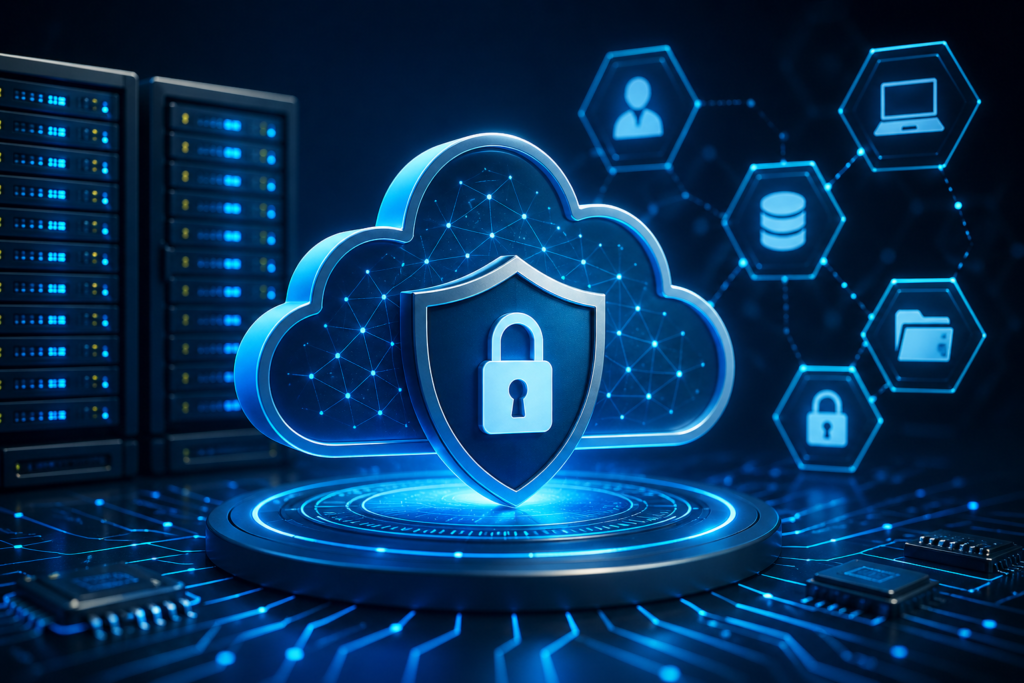
Cloud Workload Protection (CWP) is a cybersecurity approach that secures workloads running across cloud environments by continuously monitoring, detecting, and responding to threats in real time.
In 2025, CWP includes:
- Runtime behavior monitoring
- AI-based anomaly detection
- Container & Kubernetes security
- Serverless function protection
- Identity-based workload access control
It ensures workloads remain secure not just at deployment, but throughout their entire lifecycle.
Why Cloud Workload Protection is Critical
Modern cloud environments face advanced threats such as:
- Container escape attacks
- API exploitation
- Misconfigured cloud services
- Zero-day runtime vulnerabilities
- Supply chain attacks in microservices
Without workload protection, attackers can easily:
- Steal sensitive data
- Hijack compute resources
- Move laterally across cloud networks
- Inject malicious code into running applications
This makes runtime protection essential for enterprise cloud security.
Core Components of Cloud Workload Protection
1. Runtime Threat Detection
Runtime detection continuously monitors active workloads for suspicious behavior like:
- Unexpected system calls
- Unauthorized file modifications
- Abnormal network connections
2. Behavioral Analytics
AI-driven models analyze workload behavior and detect deviations from baseline patterns.
3. Container Security
Protects Docker and Kubernetes environments by:
- Scanning images before deployment
- Monitoring running containers
- Detecting privilege escalation attempts
4. Identity-Based Access Control
Ensures workloads only access resources they are authorized for using:
- IAM policies
- Zero trust principles
5. Automated Incident Response
Security systems automatically:
- Isolate compromised workloads
- Kill malicious processes
- Trigger alerts in SIEM systems
Advanced Cloud Workload Protection Strategies
1. Zero Trust Workload Architecture
In Zero Trust, no workload is trusted by default—even internal services.
Key principles:
- Continuous verification
- Least privilege access
- Micro-segmentation
2. AI-Powered Runtime Security
Modern cloud workload protection depends on AI-powered threat detection systems to identify abnormal behavior in real time.
AI systems detect threats in real time by analyzing:
- Process behavior
- Memory usage patterns
- API call anomalies
This reduces detection time from hours to seconds.
3. Microservices Security Isolation
Each microservice is isolated to prevent lateral movement attacks.
In modern distributed systems, the microservices architecture security model ensures that even if one service is compromised, the entire system remains protected.
Benefits:
- Limits blast radius
- Prevents cross-service infection
- Enhances fault isolation
4. Kubernetes Security Hardening
Kubernetes is a major target in cloud attacks.
Security strategies include:
- Pod security policies
- Network policies
- RBAC enforcement
- Admission controllers
5. Continuous Vulnerability Monitoring
Instead of periodic scanning, workloads are continuously monitored for:
- CVEs in dependencies
- Misconfigurations
- Exposed ports and APIs
Cloud Workload Protection Lifecycle
1. Build Phase
- Secure code scanning
- Dependency validation
2. Deploy Phase
- Image scanning
- Configuration validation
3. Run Phase (Critical)
- Runtime monitoring
- Behavioral analytics
- Threat detection
4. Respond Phase
- Auto-isolation of compromised workloads
- Forensic logging
- Incident response automation
Challenges in Cloud Workload Protection
1. Multi-Cloud Complexity
Managing security across AWS, Azure, and GCP increases configuration errors.
2. Ephemeral Workloads
Short-lived containers make traditional monitoring ineffective.
3. False Positives in AI Detection
AI systems sometimes flag legitimate behavior as threats.
4. Encryption Overhead
Deep inspection of encrypted traffic requires advanced tools.
Best Practices for Cloud Workload Protection
- Implement Zero Trust architecture
- Use runtime security monitoring tools
- Enable automated threat response
- Harden Kubernetes clusters
- Apply least privilege access
- Continuously scan workloads for vulnerabilities
- Use centralized logging and SIEM integration
Future Trends in Cloud Workload Protection
- Self-healing cloud workloads
- AI-driven autonomous security operations
- Quantum-resistant encryption for cloud workloads
- Fully serverless security monitoring
- Predictive threat prevention models
FAQs
1. What is Cloud Workload Protection in 2025?
It is a security approach that protects cloud workloads during runtime using monitoring, AI detection, and automated response.
2. Why is runtime security important?
Because most modern attacks occur during runtime when applications are actively running.
3. Does CWP work in multi-cloud environments?
Yes, modern CWP solutions are designed for AWS, Azure, and GCP environments.
4. What technologies are used in workload protection?
AI, machine learning, behavioral analytics, and Zero Trust frameworks.
Conclusion
Cloud Workload Protection in 2025 is no longer optional—it is a foundational requirement for modern cloud-native systems. As workloads become more distributed, ephemeral, and API-driven, runtime security becomes the last and most critical line of defense.
Organizations that implement AI-driven runtime protection, Zero Trust principles, and automated incident response will stay ahead of modern cyber threats.