
 by
by Introduction
Powerful Network Segmentation Strategies are essential in modern cybersecurity because attackers no longer stop at the first point of entry. In today’s hyper-connected IT environments, cyber attackers rarely stop after breaching a single system. Once inside a network, their primary goal is lateral movement—the process of moving from one system to another to access sensitive data, escalate privileges, or deploy ransomware. This is where organizations often fail, not because of weak perimeter security, but due to a lack of internal segmentation.
Network segmentation is one of the most effective defensive architectures to stop attackers from freely roaming inside a compromised network. By dividing a network into smaller, controlled zones, organizations can significantly reduce attack surfaces, contain breaches, and enforce strict access policies.
What is Network Segmentation?
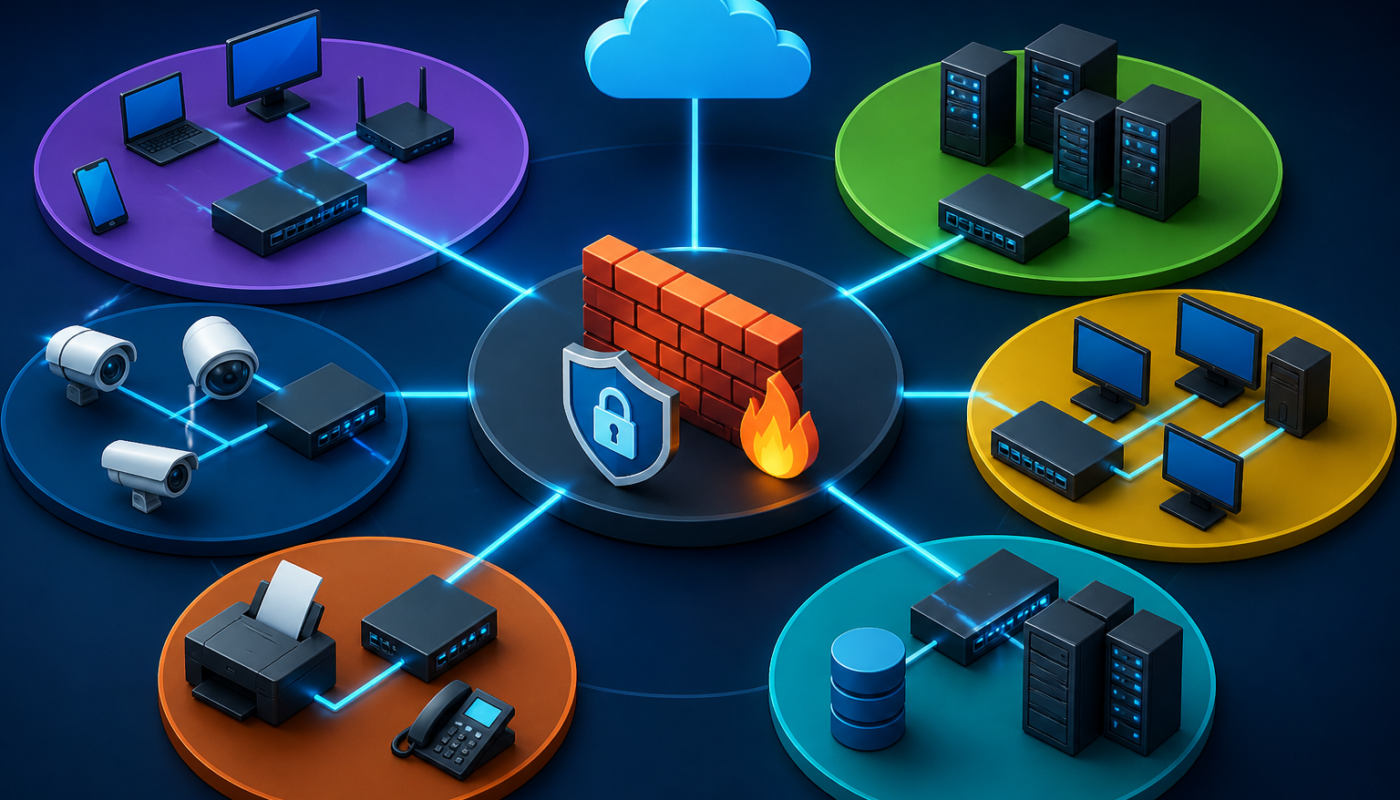
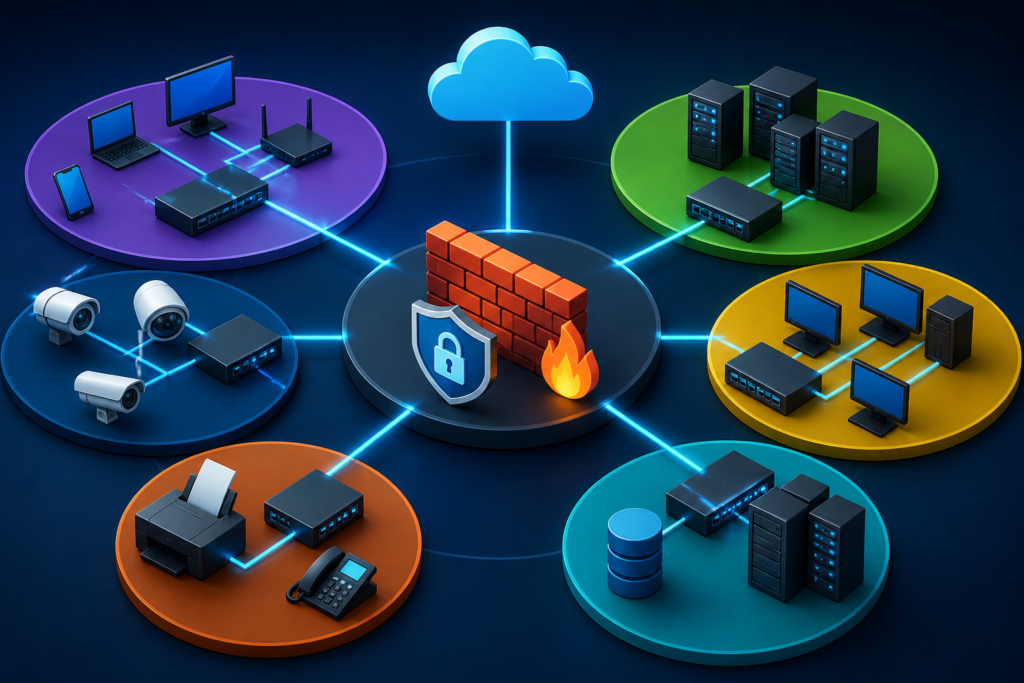
Network segmentation is the process of dividing a large network into smaller subnetworks or segments. Each segment operates independently with its own security controls, access rules, and monitoring mechanisms. Powerful Network Segmentation Strategies divide networks into secure zones to reduce internal attack risks.
Network segmentation is closely related to modern cloud and distributed system design. To understand large-scale system behavior, read more about scalability techniques.
Instead of allowing unrestricted communication across all systems, segmentation ensures that traffic flows only where it is explicitly permitted. This limits attacker mobility even if they compromise one part of the network.
Why Lateral Movement is a Major Cyber Threat
One of the core defenses against lateral movement is adopting Powerful Network Segmentation Strategies.
Lateral movement is one of the most dangerous phases of a cyberattack lifecycle. Attackers use it to:
- Move from low-value systems to high-value assets
- Escalate privileges within the network
- Access databases, credentials, or financial systems
- Deploy ransomware across multiple machines
Without segmentation, a single compromised endpoint can lead to a full-scale network breach.
9 Powerful Network Segmentation Strategies
1. Micro-Segmentation for Granular Control
Micro-segmentation divides the network at the workload or application level rather than just the subnet level. Each workload is isolated with strict access rules. Among Powerful Network Segmentation Strategies, micro-segmentation is the most granular and effective.
This ensures that even if one server is compromised, attackers cannot communicate freely with adjacent systems.
Micro-segmentation is especially powerful in cloud and virtualized environments where workloads are highly dynamic.
2. VLAN-Based Segmentation for Logical Isolation
Virtual LANs (VLANs) allow organizations to logically separate network traffic without changing physical infrastructure. VLAN-based isolation is a key part of Powerful Network Segmentation Strategies.
Common VLAN segmentation includes:
- User VLANs
- Server VLANs
- Guest VLANs
- Database VLANs
By isolating traffic types, VLANs limit unauthorized communication paths and reduce lateral movement opportunities.
3. Zero Trust Architecture Integration
A Zero Trust model assumes that no user or device should be trusted by default, even inside the network.
Zero Trust models strongly depend on Powerful Network Segmentation Strategies for internal security.
Zero Trust architecture also aligns with modern system design principles used in enterprise environments focusing on database optimization.
When combined with segmentation:
- Every access request is verified
- Continuous authentication is enforced
- Least privilege access is applied
This significantly reduces internal trust exploitation, which is a common lateral movement technique.
4. Application-Level Segmentation
Instead of only separating systems, application-level segmentation controls communication between individual services. Modern cloud systems rely on Powerful Network Segmentation Strategies at the application layer.
For example:
- Web application servers cannot directly access database servers without authentication layers
- APIs are restricted based on identity and role-based access
This prevents attackers from exploiting application trust relationships.
5. Role-Based Access Segmentation (RBAC)
Role-Based Access Control ensures that users and systems only access resources required for their role.
Role-based access is strengthened using Powerful Network Segmentation Strategies.
By combining RBAC with segmentation:
- HR systems are isolated from engineering systems
- Admin access is strictly controlled
- Sensitive data is restricted to authorized roles only
This minimizes insider threats and credential-based lateral movement.
6. Firewall-Based Internal Segmentation
Traditional firewalls are not enough when placed only at the network perimeter. Internal firewalls create segmentation barriers within the network.
Internal firewalls are a major component of Powerful Network Segmentation Strategies.
They enforce rules such as:
- Blocking unauthorized east-west traffic
- Restricting server-to-server communication
- Monitoring suspicious internal connections
This helps stop attackers after initial entry.
7. Network Access Control (NAC) Enforcement
Network Access Control systems ensure that only compliant devices can join the network. Network Access Control improves Powerful Network Segmentation Strategies by enforcing device-level security.
NAC provides:
- Device authentication before network access
- Endpoint compliance checks (antivirus, patches, encryption)
- Dynamic segmentation based on device risk level
This prevents compromised devices from spreading attacks internally.
8. DMZ Segmentation for Public-Facing Systems
A Demilitarized Zone (DMZ) isolates public-facing services from internal networks.
Typical DMZ setup includes:
- Web servers
- Email gateways
- Proxy servers
Even if attackers compromise a public server, segmentation ensures they cannot directly access internal systems or databases.
9. Continuous Network Monitoring and Traffic Analysis
Segmentation alone is not enough without visibility. Continuous monitoring ensures that suspicious lateral movement attempts are detected early.
Key practices include:
- Real-time traffic analysis
- Behavioral anomaly detection
- Logging east-west traffic flows
- SIEM integration for alerts
This helps security teams respond before attackers escalate privileges.
Benefits of Network Segmentation
Implementing segmentation strategies provides multiple security advantages:
- Reduced attack surface
- Containment of breaches
- Improved compliance (ISO, GDPR, etc.)
- Stronger insider threat protection
- Better network visibility and control
Common Mistakes to Avoid
Many organizations fail in segmentation due to:
- Overcomplicated network design
- Poor policy enforcement
- Lack of continuous monitoring
- Static segmentation in dynamic cloud environments
- Ignoring east-west traffic visibility
Avoiding these mistakes is crucial for effective defense.
Conclusion
Network segmentation is no longer optional—it is a core cybersecurity requirement in modern enterprise environments. As attackers increasingly rely on lateral movement to maximize damage, organizations must adopt layered segmentation strategies to contain threats.
By implementing micro-segmentation, VLAN isolation, Zero Trust principles, NAC enforcement, and continuous monitoring, businesses can significantly reduce the risk of internal spread after a breach.
A well-segmented network does not just slow attackers—it stops them from moving freely, protecting critical assets and ensuring operational resilience in 2025 and beyond.