 by
by Introduction
In today’s digital-first world, APIs have become the backbone of almost every application. From mobile apps and web platforms to SaaS systems and enterprise solutions, APIs power communication between different software components. As businesses grow, user traffic increases, transactions multiply, and systems become more complex. This is where Scalable API Architecture becomes essential.
A scalable API architecture ensures that your application can handle growing traffic without affecting performance, security, or reliability. Without proper scalability planning, APIs can become slow, overloaded, or even crash during peak usage. This can directly impact customer experience, revenue, and business growth.
Modern high-performance applications like streaming platforms, eCommerce stores, banking systems, and social media applications rely on scalable APIs to serve millions of requests every day. Designing APIs for scalability is no longer optional—it is a critical requirement.
Scalable API architecture is not just about handling more requests. It also focuses on improving response speed, fault tolerance, system availability, security, and easier maintenance.
In this guide, we will explore 7 proven scalable API architecture design patterns that help build reliable and high-performance web applications in 2025.
What is Scalable API Architecture?
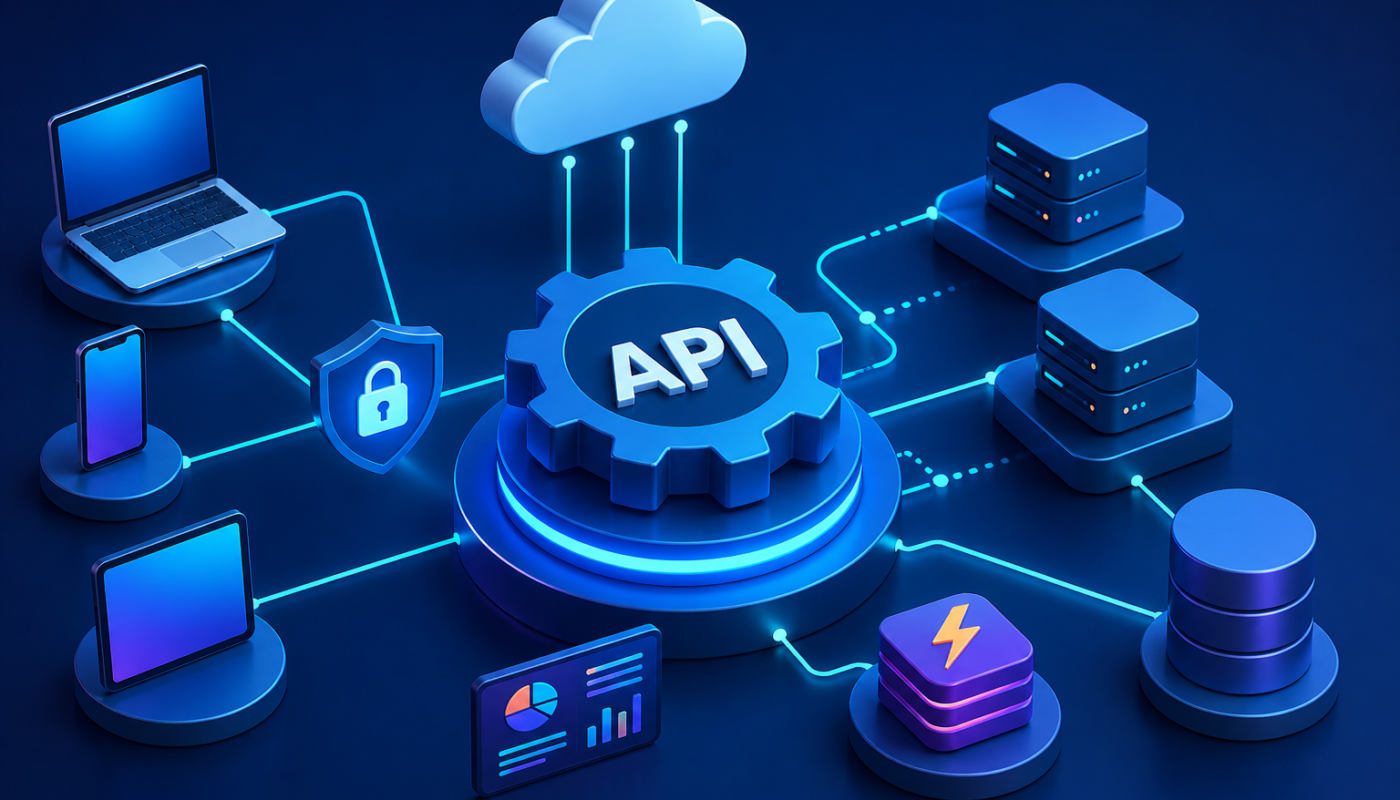
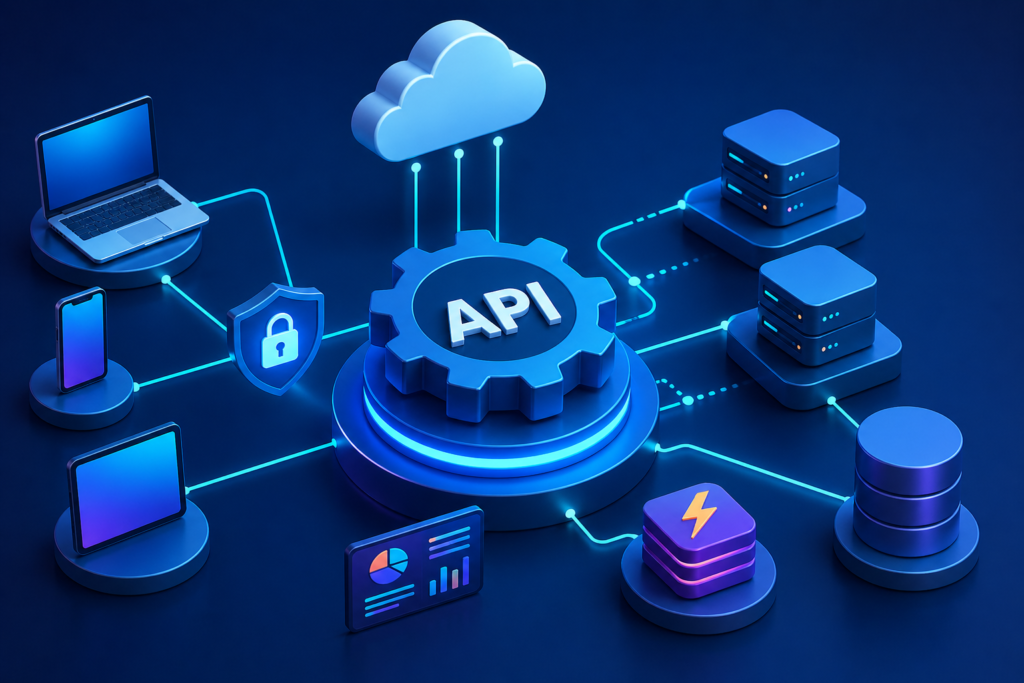
Scalable API architecture refers to designing APIs in a way that they can efficiently handle increasing workloads while maintaining speed and reliability.
It includes:
- Better traffic distribution
- Faster data processing
- Reduced server overload
- Efficient resource utilization
- High availability
- Strong security controls
A scalable API system can grow with your business without requiring complete redesigns.
7 Proven Design Patterns for Scalable API Architecture
1. API Gateway Pattern
The API Gateway Pattern is one of the most powerful approaches in scalable API architecture. Instead of clients directly communicating with multiple backend services, all requests pass through a central gateway.
This gateway handles:
- Authentication
- Request routing
- Traffic management
- Rate limiting
- Monitoring
- Logging
For example, in an eCommerce application, a client may need to access product, payment, and user services. Instead of calling each service separately, the API gateway manages everything from one entry point.
Benefits:
- Better security
- Centralized traffic control
- Simplified client communication
- Improved scalability
API gateways reduce backend complexity and improve overall system performance.
Businesses implementing strong API security best practices can improve protection against API-based threats.
2. Microservices Pattern
Microservices architecture breaks applications into smaller, independent services.
Each service focuses on a single business function.
Examples:
- User service
- Payment service
- Order service
- Notification service
This allows each API to scale independently.
For example, during high sales traffic, the order API may need more resources, while the user API remains stable.
Benefits:
- Faster deployments
- Better fault isolation
- Easy scaling
- Improved maintainability
Microservices are widely used by major platforms because they provide better scalability than monolithic systems.
A strong microservices architecture guide can help improve distributed API systems.
3. Load Balancing Pattern
Load balancing distributes incoming API traffic across multiple servers.
Without load balancing, one server may become overloaded.
Load balancing ensures:
- Equal traffic distribution
- High availability
- Better uptime
- Faster response times
Popular methods:
Round Robin
Requests are distributed equally.
Least Connection
Traffic goes to the server with the fewest active connections.
IP Hash
Traffic routing depends on client IP.
For example, large-scale SaaS applications use load balancing to handle thousands of concurrent API requests.
This pattern is critical for scalable API architecture. Businesses using NGINX load balancing guide can efficiently distribute API traffic across multiple backend servers for better performance.
4. Caching Pattern
Caching improves API performance by storing frequently requested data.
Instead of querying the database repeatedly, APIs can fetch cached data instantly.
Popular caching layers:
- Redis
- Memcached
- CDN caching
- Application-level caching
For example, product listings in an eCommerce app can be cached for faster loading.
Benefits:
- Faster API responses
- Lower database load
- Better user experience
- Reduced operational costs
Caching is one of the easiest ways to improve API scalability.
For backend performance improvements, use database optimization techniques.
5. Event-Driven Architecture Pattern
Event-driven architecture allows APIs to communicate asynchronously.
Instead of waiting for immediate responses, systems send events.
Examples:
- Order placed
- Payment completed
- Email notification sent
For example:
When a customer places an order:
- Order service creates order
- Payment service processes payment
- Notification service sends email
Each service works independently.
Benefits:
- Better scalability
- Faster background processing
- Reduced service dependency
- Improved system flexibility
This model is ideal for modern real-time applications.
6. Rate Limiting Pattern
Rate limiting controls API request volume.
It prevents API abuse and resource exhaustion.
Common rate-limiting methods:
- Fixed Window
- Sliding Window
- Token Bucket
For example:
A public API may allow 100 requests per minute.
Benefits:
- Prevents API overload
- Protects backend systems
- Stops abuse
- Improves stability
Rate limiting is an important part of scalable API architecture and API security.
7. Database Sharding Pattern
Database sharding splits large databases into smaller sections.
Each shard stores part of the data.
This improves:
- Query speed
- Write performance
- Data distribution
- Scalability
For example:
User data can be divided by region.
Benefits:
- Better performance
- Reduced database bottlenecks
- Horizontal scaling
- Better fault tolerance
Large-scale systems rely heavily on database sharding.
Benefits of Scalable API Architecture
A strong scalable API architecture provides multiple advantages.
Better Performance
Fast APIs improve user experience.
Higher Availability
Systems remain online even during high traffic.
Better Security
Centralized control improves protection.
Reduced Downtime
Scalable systems recover faster.
Easy Maintenance
Independent services simplify updates.
Cost Efficiency
Better resource utilization reduces cloud costs.
Common Challenges in API Scalability
Traffic Spikes
Sudden traffic can overload APIs.
Solution:
Autoscaling.
Database Bottlenecks
Heavy queries slow systems.
Solution:
Caching and optimization.
Service Dependency Issues
One failed service affects others.
Solution:
Circuit breakers.
Security Threats
APIs face attacks like DDoS.
Solution:
Rate limiting and API authentication.
Best Practices for Scalable API Architecture
Use Stateless APIs
Stateless APIs scale easily.
Monitor API Performance
Track:
- Latency
- Errors
- Throughput
Secure API Endpoints
Use:
- OAuth
- JWT
- Encryption
Strong API protection improves cloud-native security.
Optimize Database Queries
Slow queries reduce API speed.
Efficient database management improves scalability.
Use Cloud-Based Infrastructure
Cloud platforms offer:
- Autoscaling
- Load balancing
- Global distribution
Cloud-based systems improve scalability significantly. Modern container orchestration platforms like Kubernetes official documentation help businesses automate scaling, deployment, and workload management.
Future of Scalable API Architecture
In 2025, scalable API architecture will evolve with:
AI-Based API Optimization
AI will predict traffic patterns.
Serverless APIs
Lower infrastructure management.
Edge APIs
Faster responses globally.
GraphQL Growth
Flexible API data fetching.
Zero Trust API Security
Stronger API protection.
The future will focus on performance, automation, and security.
Conclusion
Scalable API architecture is the foundation of modern digital applications. Without scalability, applications struggle under growing user demands.
Using these proven design patterns:
- API Gateway
- Microservices
- Load Balancing
- Caching
- Event-Driven Systems
- Rate Limiting
- Database Sharding
can help build high-performance, reliable, and secure web applications.
As businesses continue to scale, investing in scalable API architecture will improve performance, customer experience, and long-term growth.
Now is the right time to implement these strategies and future-proof your applications.