 by
by Introduction
Content management systems are evolving rapidly in 2025. Traditional CMS platforms often limit flexibility because frontend and backend are tightly connected. Modern businesses need faster content delivery, better scalability, and multi-platform publishing.
This is where Headless CMS Architecture in 2025 becomes a powerful solution.
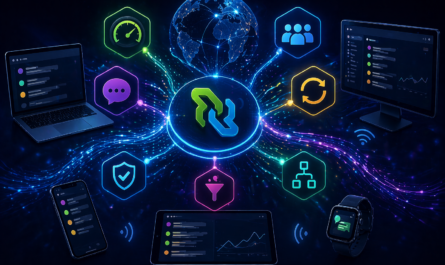
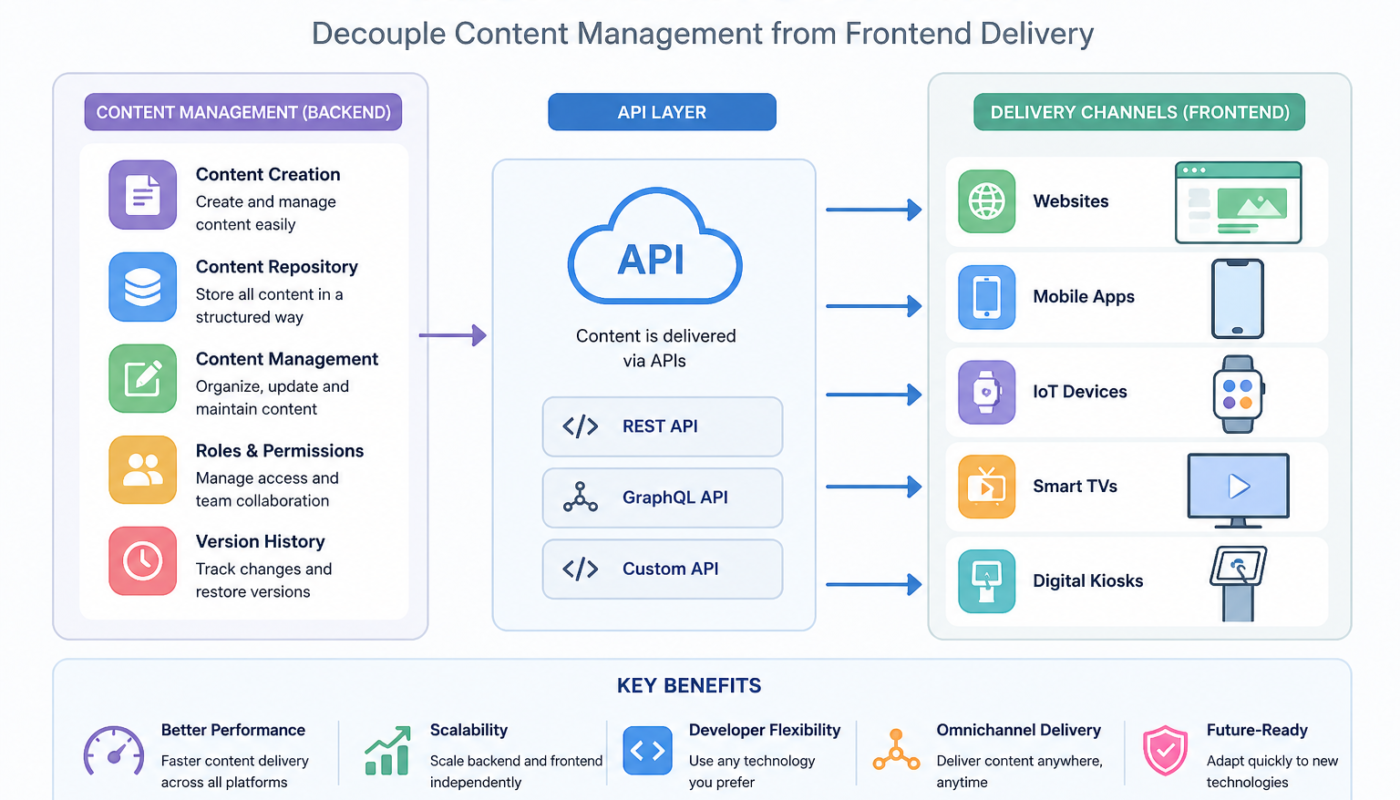
A headless CMS separates the content management backend from the frontend presentation layer. This allows developers to deliver content across websites, mobile apps, smart devices, and digital platforms using APIs.
Businesses adopting headless CMS architecture gain:
- Faster content delivery
- Better scalability
- Improved flexibility
- Omnichannel publishing
- Better developer experience
What is Headless CMS Architecture?
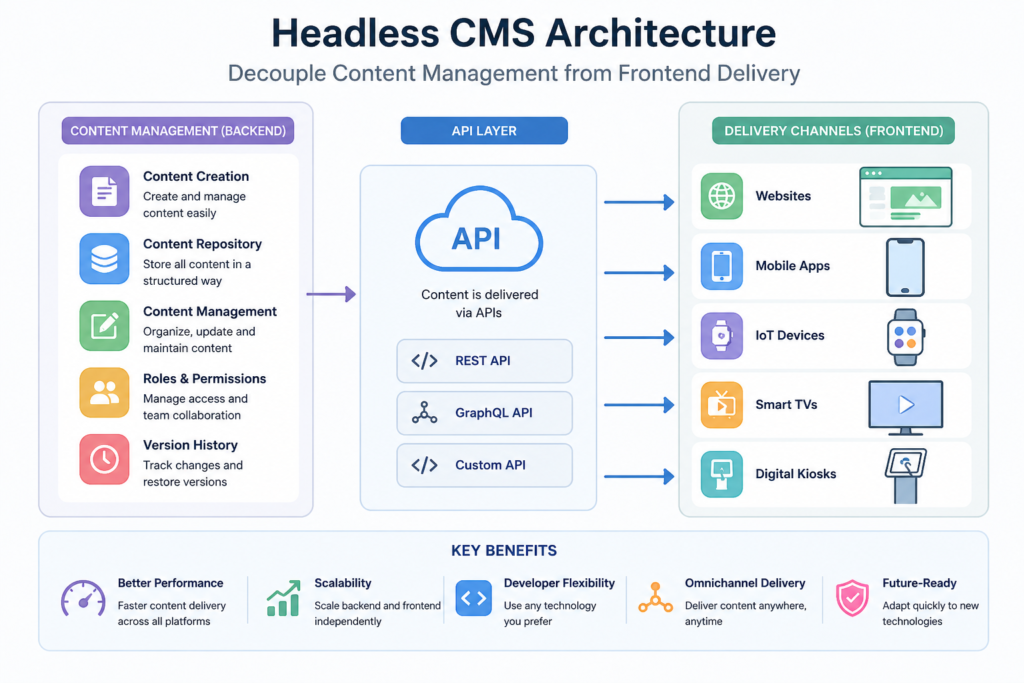
A headless CMS is a content management system where the backend content repository is separated from the frontend display layer.
Traditional CMS:
Frontend + Backend = Connected
Headless CMS:
Backend (Content) → API → Multiple Frontends
This modern web architecture allows content to be delivered anywhere through API-driven systems.
Examples:
- Websites
- Mobile apps
- Smart TVs
- IoT devices
- Digital kiosks
Popular headless CMS platforms include Contentful, Strapi, and Sanity.
Why Headless CMS Architecture Matters
Businesses now publish content across multiple platforms.
Users expect:
- Fast loading
- Personalized experiences
- Multi-device access
- Real-time content updates
Traditional CMS systems struggle with:
- Scalability
- API flexibility
- Frontend customization
- Performance
Headless CMS architecture solves these challenges.
Benefits of Headless CMS Architecture
1. Omnichannel Content Delivery
Modern mobile app development relies heavily on API-driven content systems for faster content updates.
One content source can serve multiple platforms.
Benefits:
- Website publishing
- Mobile app content
- Smart device content
2. Better Performance
Frontend frameworks improve speed.
Benefits:
- Faster loading
- Better SEO
- Improved user experience
3. Developer Flexibility
Developers can choose any frontend framework.
Examples:
- React
- Next.js
- Vue.js
4. Scalability
Independent frontend and backend scaling.
Benefits:
- Better traffic handling
- Improved performance
- Flexible infrastructure
5. Strong API Integration
Content APIs support modern applications.
Benefits:
- Faster integration
- Better automation
- Easier development
7 Powerful Strategies for Scalable Headless CMS Architecture
1. API-First Content Design
Structure content for API consumption.
Benefits:
- Better flexibility
- Faster integration
- Easier content reuse
2. CDN-Based Content Delivery
Use CDN caching for global delivery.
Benefits:
- Faster content access
- Lower server load
- Better scalability
3. Modular Content Modeling
Break content into reusable modules.
Examples:
- Author block
- Product block
- FAQ block
Benefits:
- Easier management
- Better consistency
4. GraphQL API Integration
Use GraphQL for flexible content fetching.
Following GraphQL API best practices improves content querying efficiency and API scalability.
Benefits:
- Reduced over-fetching
- Faster data retrieval
- Better frontend performance
5. Frontend Framework Optimization
Optimize frontend rendering.
Best frameworks:
- Next.js
- Nuxt
Benefits:
- Better SEO
- Faster performance
6. Content Version Control
Track content changes.
Benefits:
- Better rollback
- Team collaboration
- Safer publishing
7. Automated Content Workflows
Automate publishing pipelines.
Benefits:
- Faster publishing
- Reduced manual work
- Better efficiency
Best Headless CMS Platforms
Contentful
Best for enterprise content systems.
Strapi
Best for flexible custom CMS.
Sanity
Best for real-time collaboration.
Ghost
Best for content publishing.
Directus
Best for database-driven content.
Real-World Use Cases
E-commerce
Manage product content across platforms.
Benefits:
- Faster product publishing
- Better content consistency
News Platforms
Deliver content across web and mobile.
Benefits:
- Faster publishing
- Better scalability
SaaS Platforms
Manage dashboards and documentation.
Benefits:
- Centralized content
- Better developer workflows
Mobile Applications
Content delivery through APIs.
Benefits:
- Faster updates
- Better app performance
Enterprise Systems
Multi-channel business content delivery.
Benefits:
- Better consistency
- Improved scalability
Challenges in Headless CMS Architecture
API Dependency
Content depends on APIs.
Solution:
Strong API management.
Higher Development Complexity
Requires frontend expertise.
Solution:
Use experienced developers.
Content Preview Limitations
Preview systems can be harder.
Solution:
Use preview environments.
Infrastructure Management
Requires proper hosting.
Solution:
Use scalable cloud systems.
Best Practices for Headless CMS Implementation
Use CDN Caching
Improve delivery speed.
Secure APIs
Protect content APIs.
Optimize Content Models
Improve content structure.
Monitor API Performance
Track system speed.
Use Automation Pipelines
Improve workflow speed.
Scale Infrastructure Properly
Handle traffic efficiently.
Future of Headless CMS Architecture
Future trends include:
- AI-powered content delivery
- Better API automation
- Faster CDN integration
- Improved personalization
- Better omnichannel systems
Headless CMS will continue dominating modern content infrastructure.
Conclusion
Headless CMS Architecture in 2025 is changing how businesses manage and deliver content. Traditional CMS systems cannot match the flexibility and scalability modern digital systems require.
By implementing strong headless CMS strategies, businesses achieve:
- Faster content delivery
- Better scalability
- Omnichannel publishing
- Improved performance
- Better developer efficiency
For scalable content systems in 2025, headless CMS is becoming essential.