
 by
by Introduction
In 2025, cybersecurity is no longer just about protecting networks and endpoints—identity has become the primary attack surface. Modern cybercriminals no longer need to break into systems through complex exploits; instead, they simply steal or manipulate user identities to gain direct access.
Identity Threat Detection and Response (ITDR) has emerged as a critical security discipline designed to detect, investigate, and respond to identity-based attacks in real time. From credential theft and session hijacking to privilege escalation and insider misuse, identity threats are now at the center of enterprise risk.
As organizations increasingly adopt cloud services, remote work, and SaaS platforms, traditional security tools like firewalls and endpoint protection are no longer enough. ITDR fills this gap by focusing specifically on identity behavior, authentication anomalies, and access misuse patterns.
What is Identity Threat Detection and Response (ITDR)?
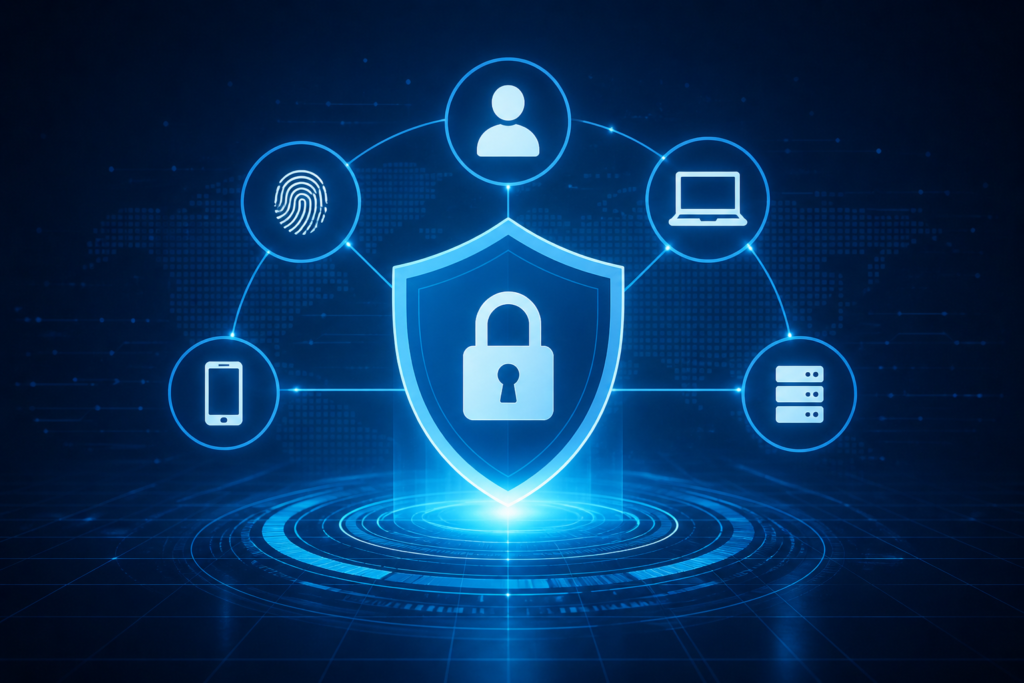
Identity Threat Detection and Response (ITDR) is a cybersecurity approach that focuses on identifying and mitigating threats targeting user identities, credentials, and access systems.
Unlike traditional security systems that focus on devices or networks, ITDR focuses on:
- User authentication behavior
- Access patterns across systems
- Privilege misuse detection
- Identity lifecycle monitoring
- Real-time response to suspicious identity activity
ITDR works closely with IAM (Identity and Access Management), SIEM (Security Information and Event Management), and EDR (Endpoint Detection and Response), but it is specifically designed to detect identity-centric attacks.
Identity Threat Detection and Response (ITDR) Explained
Why Identity Attacks Are Increasing
Identity-based attacks often begin with phishing campaigns, which is why Phishing Attacks are a major factor in credential theft and account compromise.
Cyber attackers prefer identity-based attacks because they are:
- Easier to execute than system exploitation
- Harder to detect using traditional security tools
- Highly effective in cloud environments
- Often successful due to weak passwords or phishing
With cloud adoption and remote work, Identity Threat Detection and Response has become critical for protecting user accounts.
Major reasons for rising identity threats:
- Cloud adoption everywhere
Businesses rely heavily on SaaS applications, increasing identity exposure. - Remote and hybrid work models
Employees access systems from multiple locations and devices. - Credential stuffing attacks
Leaked passwords from previous breaches are reused at scale. - Phishing evolution with AI
Attackers now use AI-generated phishing emails that are highly convincing. - Over-permissioned accounts
Excessive access rights increase damage from compromised accounts.
Key Types of Identity Threats in Modern Cybersecurity
Understanding attack types is essential for building strong ITDR systems.
1. Credential Theft
Attackers steal usernames and passwords using phishing, malware, or data breaches.
2. Session Hijacking
Hackers steal active login sessions and bypass authentication entirely.
3. Privilege Escalation
A low-level account is exploited to gain admin-level access.
Privilege escalation attacks often exploit unknown vulnerabilities, where Zero-Day Attack Prevention becomes essential to stop attackers from gaining unauthorized access.
4. Account Takeover (ATO)
Complete control of a user account after successful compromise.
5. Insider Threats
Employees or contractors misuse their legitimate access intentionally or accidentally.
6. Password Spraying & Brute Force
Attackers attempt common passwords across multiple accounts to avoid detection.
How Identity Threat Detection and Response Works
ITDR systems continuously monitor identity behavior across an organization’s ecosystem.
Modern systems use Identity Threat Detection and Response to continuously monitor user behavior and authentication patterns.
Step 1: Identity Data Collection
ITDR collects identity-related logs such as:
- Login attempts
- MFA verification logs
- Privilege changes
- Access requests
- Device and location data
Step 2: Behavioral Analysis
Machine learning models analyze:
- Normal login patterns
- Device consistency
- Geographic access trends
- Time-based usage behavior
Step 3: Threat Detection
AI-driven monitoring combined with threat intelligence helps detect suspicious identity behavior in real time.
The system flags anomalies such as:
- Login from unusual location
- Impossible travel (login from two countries in short time)
- Unusual privilege escalation
- Suspicious API access behavior
Step 4: Automated Response
Once a threat is detected, ITDR can:
- Lock user accounts
- Force password reset
- Trigger multi-factor authentication
- Revoke session tokens
- Alert security teams
Core Components of an Effective ITDR System
1. Identity Visibility Layer
Provides complete visibility of all user identities across cloud and on-prem environments.
2. Behavioral Analytics Engine
Uses AI/ML to detect deviations from normal behavior patterns.
3. Privileged Access Monitoring
Tracks admin-level activities and detects misuse of elevated permissions.
4. Threat Intelligence Integration
Correlates identity data with known threat indicators.
5. Automated Incident Response
Enables real-time mitigation without manual intervention.
Advanced Identity Threat Techniques
Cyber attackers are becoming more sophisticated, using advanced methods such as:
AI-Powered Phishing
Fake emails and messages generated using AI to mimic real communication patterns.
Deepfake Authentication Attacks
Voice or video manipulation used to bypass identity verification systems.
Token Theft Attacks
Stealing authentication tokens from browsers or applications.
OAuth Abuse
Exploiting third-party application permissions to gain access to sensitive data.
Best Practices for Identity Threat Detection and Response
1. Implement Zero Trust Architecture
Modern organizations rely on the Zero Trust Architecture to ensure that no user or device is trusted by default in identity-based systems.
Never trust any user or device by default—always verify.
Implementing Identity Threat Detection and Response helps organizations strengthen Zero Trust security and reduce account compromise risks.
2. Enable Multi-Factor Authentication (MFA)
Reduce risk of credential-based attacks.
3. Use Least Privilege Access
Users should only have minimum required permissions.
4. Monitor All Identity Activities
Log every authentication and access event.
5. Apply AI-Based Behavioral Analytics
Detect abnormal behavior in real time.
6. Conduct Regular Access Reviews
Remove unused or excessive permissions.
7. Integrate ITDR with SIEM and SOAR
Enhance detection and automated response capabilities.
Challenges in Implementing ITDR
Despite its benefits, organizations face several challenges:
1. High Volume of Identity Data
Managing large-scale identity logs can be complex.
2. False Positives
Legitimate user behavior may sometimes trigger alerts.
3. Integration Complexity
ITDR must integrate with multiple systems like IAM, cloud platforms, and SaaS tools.
4. Skill Gap
Security teams require advanced expertise in identity analytics.
Future of Identity Threat Detection and Response
The future of ITDR in 2025 and beyond is driven by automation, AI, and predictive security.
Key trends include:
- Predictive identity risk scoring
- Fully autonomous threat response systems
- Passwordless authentication models
- Decentralized identity frameworks
- Continuous identity verification
Eventually, identity security will shift from reactive detection to proactive prevention.
Conclusion
Identity Threat Detection and Response (ITDR) has become a critical pillar of modern cybersecurity strategy in 2025. As attackers increasingly target user identities instead of systems, organizations must adopt identity-first security models.
By combining behavioral analytics, AI-driven detection, and automated response mechanisms, ITDR significantly reduces the risk of account compromise and unauthorized access.
In the evolving cyber threat landscape, securing identity is no longer optional—it is the foundation of enterprise security resilience.