 by
by Introduction
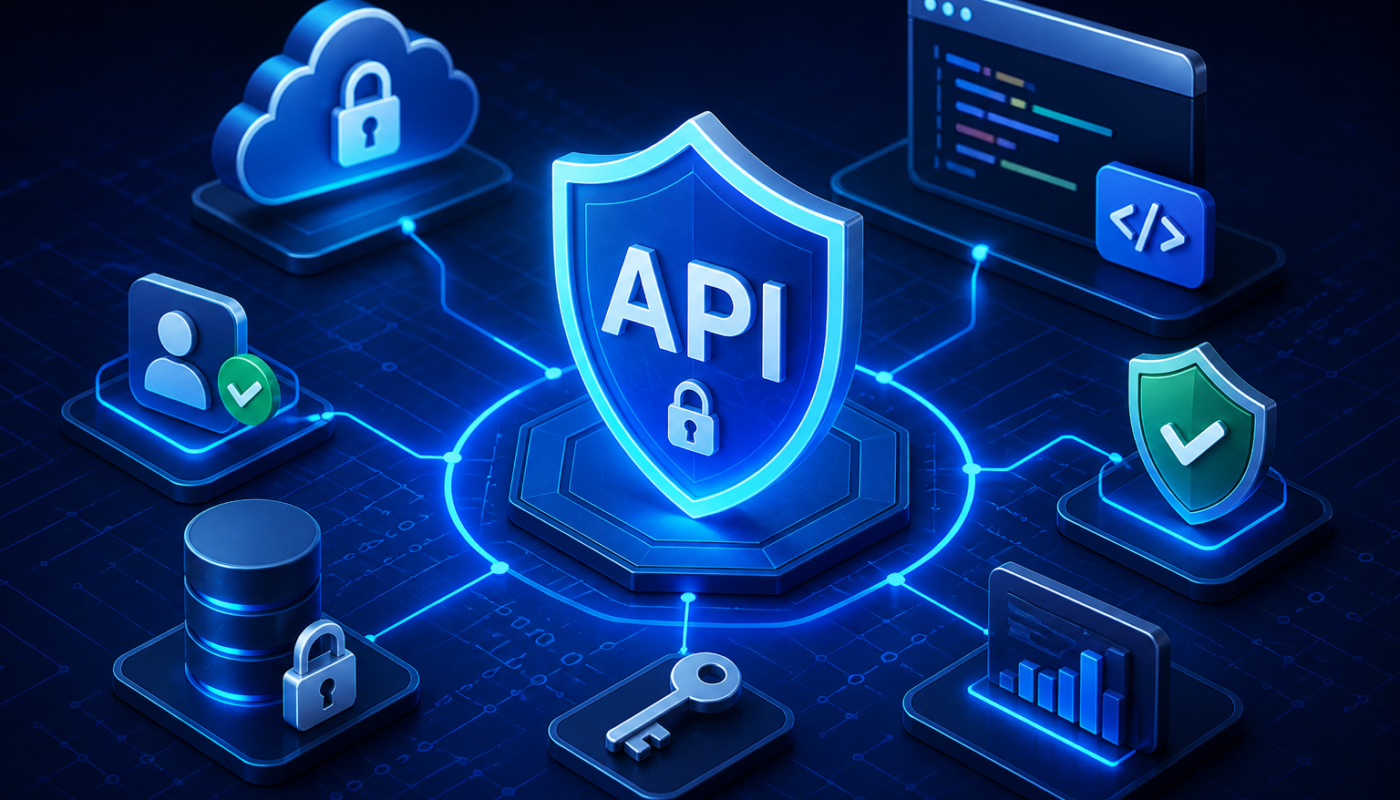
API Security Best Practices are essential in modern software development where APIs act as the backbone of communication. In today’s cloud-based, microservices, and distributed systems, APIs act as the core communication layer that connects different services and applications.
This means that if APIs are not properly secured, the entire system becomes vulnerable. Attackers can target APIs to gain unauthorized access to sensitive data, perform malicious actions, and compromise backend systems.
Therefore, in modern development, API security is no longer an optional feature but a mandatory security layer.
Why API Security is Critical Today
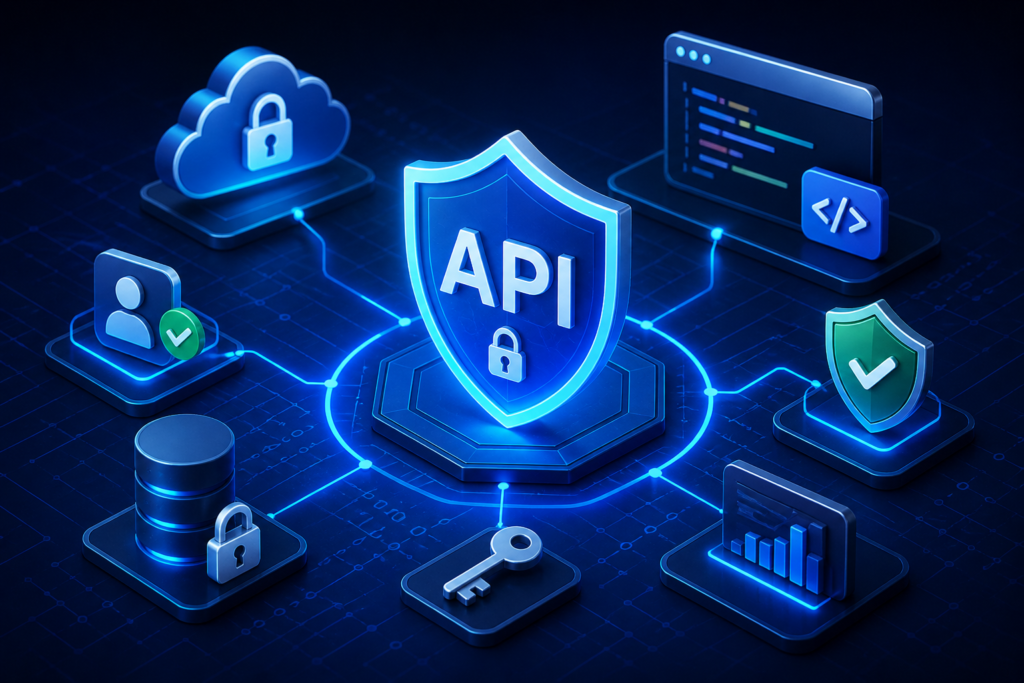
API Security Best Practices are critical because modern applications rely heavily on distributed systems. Modern applications are no longer single monolithic systems. Instead, they are built using multiple services, cloud platforms, and third-party integrations.
API security is critical because:
- Sensitive data is transferred through APIs
- Microservices architecture is fully API-dependent
- Mobile applications continuously communicate with backend APIs
- Cloud environments rely heavily on API-based communication
If APIs are not secure, even a small vulnerability can lead to a full system breach.
Common API Security Threats
Understanding API Security Best Practices helps identify common security threats in modern systems.
Before implementing API security, it is important to understand the major threats:
- Broken authentication mechanisms
- Data exposure through insecure endpoints
- Injection attacks (SQL, NoSQL, and command injection)
- DDoS and traffic flooding attacks
- Improper access control implementation
- Leaked or stolen API keys
Attackers increasingly use AI-Powered Cyber Attacks to exploit API weaknesses
These threats directly impact system reliability and data privacy.
Top 8 API Security Best Practices
1. Strong Authentication and Authorization
Authentication is the first line of defense in API security. It ensures that only valid and authorized users or systems can access APIs. Implementing API Security Best Practices ensures strong authentication and authorization mechanisms.
OAuth 2.0 is widely used as an industry-standard authentication protocol. JWT tokens are commonly used for session management due to their short lifespan, which reduces hijacking risks. Role-Based Access Control (RBAC) ensures that each user can only access permitted resources.
Weak authentication can allow attackers to impersonate users and gain unauthorized access to sensitive data.
2. API Rate Limiting and Abuse Protection
Rate limiting protects APIs from abuse and overload attacks by controlling how many requests a user or IP address can make within a specific time frame.
Its main purpose is to prevent brute force attacks and Distributed Denial-of-Service (DDoS) attacks. Without rate limiting, attackers can overload the system and cause service downtime.
Modern systems also use exponential backoff techniques, which delay repeated failed requests to reduce abuse.
3. Secure API Gateway Architecture
An API Gateway acts as a centralized security layer that manages all incoming API requests. API Security Best Practices recommend using a secure API gateway for centralized control.
Its main role is to enforce authentication, filter traffic, and validate requests. All APIs are controlled through a single entry point, making monitoring and management easier.
If the API Gateway is not secure, attackers may directly access backend services without restriction.
4. Data Encryption Standards
Encryption ensures that data remains secure both during transmission and storage. Encryption is a core part of API Security Best Practices for protecting sensitive data. Data protection is further enhanced with strong data privacy controls.
TLS 1.3 is used for secure communication and prevents data interception during transfer. AES-256 encryption is commonly used to secure stored data.
Sensitive information should never be transmitted in plain text or exposed in URL parameters.
5. Input Validation and Injection Prevention
Input validation is a critical component of API security. If user inputs are not properly validated, injection attacks can occur. API Security Best Practices require strict input validation to prevent injection attacks.
Strict schema validation ensures that only expected data formats are accepted. Parameterized queries help prevent SQL injection attacks.
Improper input handling may allow attackers to execute system-level commands, which can be highly dangerous.
6. API Logging and Continuous Monitoring
Logging and monitoring help detect security incidents at an early stage. Monitoring and logging are key API Security Best Practices for detecting threats early.
Every API request should be logged to track suspicious activity. SIEM tools provide real-time analysis and help detect anomalies.
Without proper monitoring, attacks may go unnoticed for a longer period, increasing potential damage.
7. API Versioning and Lifecycle Security
APIs evolve over time, which makes versioning an important security practice. API Security Best Practices include proper versioning to avoid vulnerabilities in old APIs.
Versioned APIs (such as /v1 and /v2) help maintain backward compatibility. Older APIs should be deprecated because they may contain vulnerabilities.
Regular security patches must be applied to keep APIs updated and secure.
8. Secure API Key and Secret Management
API keys are sensitive credentials that control system access. If leaked, they can compromise the entire system. Secure API key management is one of the most important API Security Best Practices.
API keys should be stored in secure vaults and rotated regularly. The principle of least privilege should be followed so each key has limited access.
Usage monitoring helps detect unauthorized or abnormal usage patterns.
Advanced API Security Strategies
Zero Trust API Security Model
In a Zero Trust model, every request is verified regardless of whether it comes from inside or outside the network.
The principle of “never trust, always verify” helps reduce internal as well as external threats.
API Security Testing
Regular security testing is essential for identifying vulnerabilities.
Penetration testing and OWASP API Security Top 10 guidelines help secure systems effectively. Automated scanning tools provide continuous protection.
DevSecOps Integration
Security should be integrated into the development lifecycle.
Adding security checks in CI/CD pipelines helps detect vulnerabilities early. Automated tools ensure continuous code-level security enforcement.
Benefits of Strong API Security
- Sensitive data remains fully protected
- Unauthorized access is blocked
- System uptime and reliability improve
- Compliance requirements are met
- Customer trust increases
Future of API Security
API security is expected to become more AI-driven and fully automated.
- AI-based threat detection systems
- Automated vulnerability patching
- Adoption of Zero Trust architecture
- Cloud-native security frameworks
FAQs
1. What is API security?
API security is the process of protecting APIs from unauthorized access, attacks, and data breaches.
2. Why is API security important?
Because APIs are the primary entry point of modern applications and are frequently targeted by attackers.
3. What is the biggest API vulnerability?
Broken authentication and leaked API keys are among the most common vulnerabilities.
4. How does rate limiting improve API security?
It prevents excessive requests, reducing abuse and protecting systems from DDoS attacks.
5. What is the purpose of an API Gateway?
An API Gateway provides centralized control for authentication, routing, and monitoring of API traffic.
Conclusion
API security is one of the most critical components of modern application development. By implementing strong authentication, encryption, monitoring, and secure architecture, organizations can effectively protect their systems from evolving cyber threats. By following API Security Best Practices, organizations can build secure, scalable, and reliable systems.