 by
by Introduction
Mobile applications today require frequent updates, faster bug fixes, and continuous feature delivery. Manual deployment processes are slow, error-prone, and not suitable for modern development cycles. This is where Mobile App CI/CD pipeline strategies for faster deployment automation become essential.
CI/CD (Continuous Integration and Continuous Deployment) helps automate the entire software delivery process—from code integration to testing and deployment—ensuring faster and more reliable mobile app releases in 2025. Mobile App CI/CD pipeline strategies are essential for automating modern mobile development workflows.
What is a Mobile App CI/CD Pipeline?
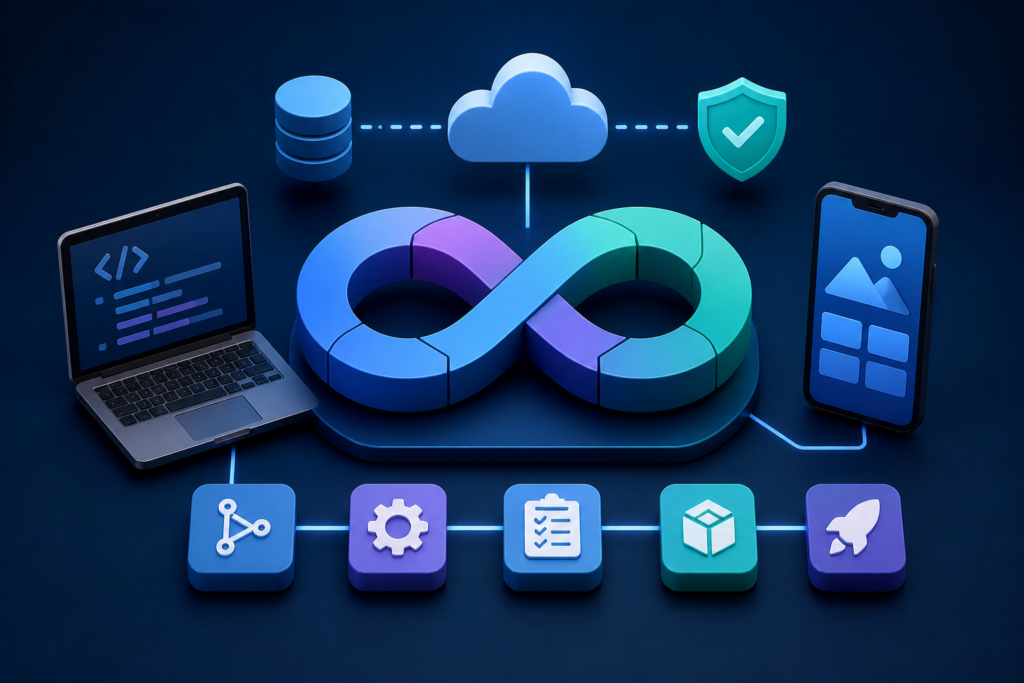
A CI/CD pipeline is an automated workflow that builds, tests, and deploys mobile applications continuously.
It allows developers to push code updates frequently without breaking the application. Mobile CI/CD systems are a core part of modern DevOps automation practices, enabling faster and reliable deployments.
Key stages include:
- Code integration from multiple developers
- Automated build generation (APK/IPA)
- Automated testing (unit + UI tests)
- Code validation and quality checks
- Deployment to testing or production environments
This reduces manual effort and improves development speed.
Why CI/CD is Important for Mobile Apps
Modern mobile applications require fast updates and high stability. CI/CD solves major development challenges:
- Faster release cycles
- Reduced human errors
- Early bug detection
- Better collaboration between teams
- Consistent build environments
With increasing competition in mobile apps, automation has become mandatory.
CI/CD Pipeline Architecture for Mobile Apps
Implementing Mobile App CI/CD pipeline strategies helps reduce manual deployment errors and improves release speed.
A typical mobile CI/CD pipeline includes several automated stages:
1. Source Control System
Developers push code to repositories like GitHub, GitLab, or Bitbucket.
2. Build Automation
Code is automatically compiled into application builds:
- Android APK
- iOS IPA
3. Automated Testing
Testing ensures app quality:
- Unit testing
- UI testing
- Integration testing
CI/CD efficiency improves when combined with backend API performance optimization techniques to reduce latency and improve build speed.
4. Artifact Storage
Built applications are stored in systems like Firebase App Distribution or cloud storage.
5. Deployment Automation
Final apps are deployed to:
- Google Play Store
- Apple App Store
- Testing environments
CI/CD Workflow in Mobile App Development
A structured CI/CD workflow ensures smooth automation:
Step-by-step process:
- Developer commits code
- CI server triggers build automatically
- Automated tests are executed
- Build artifacts are generated
- Code is validated for quality and security
- Deployment is pushed to staging or production
This workflow ensures fast and reliable app delivery.
Mobile App CI/CD Pipeline Strategies
1. Continuous Integration Strategy
Continuous Integration ensures that developers frequently merge code into a shared repository.
Benefits:
- Early bug detection
- Reduced integration conflicts
- Faster feedback cycles
2. Automated Testing Strategy
Automated testing is critical for maintaining app quality.
Types include:
- Unit testing
- UI testing
- Regression testing
This reduces production bugs significantly.
3. Parallel Build Strategy
Building Android and iOS apps simultaneously improves speed.
Benefits:
- Faster deployment cycles
- Reduced build time
- Better resource usage
4. Feature Flag Strategy
Feature flags allow developers to enable or disable features without releasing new builds.
Benefits:
- Controlled feature rollout
- Reduced deployment risks
- Improved user experience
5. Continuous Deployment Strategy
Once code passes all checks, it is automatically deployed to production.
Benefits:
- Faster release cycles
- Minimal manual intervention
- High scalability
Business Benefits of CI/CD Pipelines
Implementing CI/CD pipelines provides major business advantages:
- Faster time-to-market
- Lower development costs
- Improved app reliability
- Better team collaboration
- Continuous feature delivery
Companies using CI/CD gain a strong competitive advantage.
CI/CD Tools for Mobile Development
Modern DevOps teams widely adopt Mobile App CI/CD pipeline strategies to streamline testing and deployment automation.
Popular tools used in modern pipelines:
- Jenkins
- GitHub Actions
- Bitrise
- CircleCI
- Azure DevOps
These tools automate build, test, and deployment processes efficiently.
Challenges in Mobile CI/CD
Despite automation, challenges exist:
- Complex iOS build processes
- App Store approval delays
- Device fragmentation
- Dependency management issues
- Testing environment inconsistencies
Proper pipeline design helps overcome these issues.
Security in Mobile CI/CD Pipelines
Security is critical in automation workflows.
Best practices include:
- Secure API key management
- Role-based access control
- Encrypted build pipelines
- Vulnerability scanning
Security ensures safe and reliable deployments.
Best Practices for CI/CD Pipelines
Following Mobile App CI/CD pipeline strategies ensures consistent builds and faster release cycles across mobile platforms.
To optimize performance:
- Keep builds small and fast
- Automate all testing stages
- Use version control properly
- Monitor pipeline performance
- Implement rollback strategies
- Use cloud-based CI/CD tools
These practices improve reliability and efficiency.
Real-World Use Cases
1. E-commerce Apps
Frequent updates for offers and UI improvements.
2. Fintech Apps
Security updates and fast bug fixes.
3. Social Media Apps
Continuous feature rollouts.
4. Gaming Apps
Frequent patches and content updates.
Future of Mobile CI/CD
The adoption of Mobile App CI/CD pipeline strategies is expected to grow rapidly with AI-driven automation in 2025.
The future of CI/CD is highly automated and intelligent:
- AI-driven pipeline optimization
- Self-healing build systems
- Zero-downtime deployments
- Predictive failure detection
- Cloud-native CI/CD workflows
Automation will become smarter and more predictive.
Conclusion
Mobile App CI/CD pipeline strategies for faster deployment automation are essential for modern app development in 2025. They help teams deliver high-quality applications faster, reduce errors, and improve scalability.
As mobile ecosystems evolve, CI/CD will remain a core foundation for efficient and reliable software delivery. Mobile App CI/CD pipeline strategies play a key role in achieving faster and more reliable app deployment in 2025.