

 by
Introduction
Backend API Performance Optimization in 2025 is one of the most critical requirements for modern web and cloud applications. Today’s digital systems are built on APIs that connect frontend interfaces, databases, microservices, third-party integrations, and cloud infrastructure. If APIs are slow, unstable, or poorly optimized, the entire application suffers in performance, scalability, and user experience.
Modern applications are no longer simple monolith systems. They are distributed, cloud-native, microservices-based, and handle millions of requests simultaneously. This increased complexity demands highly optimized backend APIs that can handle traffic spikes, reduce latency, and maintain consistent performance under heavy load.
Backend API optimization focuses on improving response time, reducing server load, optimizing database queries, enhancing caching strategies, and ensuring efficient communication between services. In 2025, optimization is not just a performance improvement technique—it is a core engineering requirement for building scalable systems.
This blog explains advanced techniques, real-world strategies, challenges, and future trends in backend API performance optimization.

What is Backend API Performance Optimization?
Backend API performance optimization refers to the process of improving how efficiently APIs process incoming requests and return responses. The goal is to make APIs faster, more scalable, and more resource-efficient.
It involves improving multiple layers of the system:
- Application logic efficiency
- Database query performance
- Network communication speed
- Server resource utilization
- Response payload optimization
In simple terms, API optimization ensures that every request is handled in the fastest and most efficient way possible.
A well-optimized API reduces system load, improves user experience, and lowers infrastructure costs.
Why API Performance is Important in Modern Systems
APIs are the backbone of modern software architecture. Every action in a digital system depends on API calls.
Key areas where APIs are used:
- User authentication and authorization
- Data retrieval and processing
- Payment gateways
- Microservices communication
- Real-time data streaming
Poor API performance leads to:
- Slow page load times
- Increased server costs
- High latency under traffic spikes
- Frequent request failures
- Poor user experience and retention
Optimized APIs provide:
- Faster response times
- Better scalability under load
- Reduced cloud infrastructure costs
- Stable performance during peak traffic
- Improved system reliability
In 2025, where user expectations are extremely high, even a 1-second delay can impact conversions and engagement.
Key Techniques for Backend API Optimization
Backend API Performance Optimization plays a critical role in improving performance and scalability.
1. Efficient Database Query Optimization
Database performance is one of the biggest factors affecting API speed.
Best practices include:
- Using proper indexing strategies
- Avoiding unnecessary joins
- Selecting only required fields instead of full tables
- Using query caching where possible
- Avoiding repeated database calls
Poor database design can slow down even the best APIs, so optimization at this layer is critical.
2. Advanced Caching Strategies
Caching significantly reduces API response time by storing frequently accessed data.
Common caching techniques:
- In-memory caching (Redis, Memcached)
- Browser caching
- CDN caching for static content
- API response caching
Benefits:
- Reduces database load
- Improves response speed
- Handles high traffic efficiently
Caching is one of the most effective optimization methods in modern systems.
3. Load Balancing for Scalability
Load balancing distributes incoming API traffic across multiple servers.
Advantages:
- Prevents server overload
- Ensures high availability
- Improves response consistency
- Enables horizontal scaling
In cloud environments, load balancing is essential for handling unpredictable traffic patterns.
4. Asynchronous Processing Architecture
Not all API operations need immediate execution. Some tasks can be processed asynchronously.
Examples:
- Sending emails
- Generating reports
- Logging events
- Processing large data sets
Tools used:
- Message queues (RabbitMQ, Kafka)
- Event-driven systems
This approach reduces API response time and improves system efficiency.
5. API Payload Optimization
Reducing response size improves speed and performance.
Techniques include:
- Using GZIP or Brotli compression
- Removing unnecessary fields from responses
- Using lightweight JSON structures
- Avoiding over-fetching data
Smaller payload = faster data transfer.
6. Rate Limiting and Traffic Control
Rate limiting protects APIs from excessive usage and abuse.
Benefits:
- Prevents DDoS attacks
- Controls traffic spikes
- Maintains system stability
- Ensures fair usage among users
This is essential for maintaining performance under heavy load.
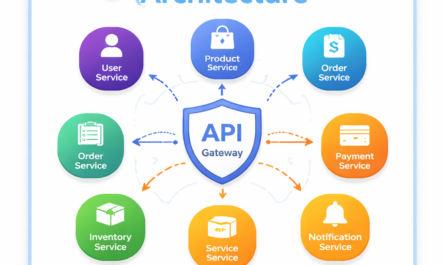
7. Microservices Architecture Optimization
Modern systems are built using microservices, which need proper optimization.
Key strategies:
- Independent scaling of services
- Reducing inter-service communication
- Using API gateways for routing
- Optimizing service dependencies
Microservices improve flexibility but require careful performance tuning.
Monitoring and Observability
Without monitoring, optimization is impossible.
Essential tools:
- Prometheus
- Grafana
- ELK Stack
Metrics to track:
- Response time (latency)
- Request success/failure rate
- CPU and memory usage
- Throughput (requests per second)
- Error logs and bottlenecks
Monitoring helps identify performance issues before they impact users.
Security and Performance Relationship
Security directly impacts API performance. Poor security implementation can slow down APIs significantly.
Best practices:
- JWT-based authentication
- API gateway security layers
- Encrypted communication (HTTPS/TLS)
- Input validation and sanitization
- Secure token management
A balanced approach between security and performance is essential in modern systems.
Challenges in API Performance Optimization
Even with best practices, organizations face several challenges:
- Complex distributed architectures
- Unpredictable traffic spikes
- Database bottlenecks
- Lack of real-time monitoring
- Poor system design decisions
- Skill gaps in DevOps teams
Solving these challenges requires continuous optimization and monitoring.
Future of API Performance Optimization
The future of backend API optimization is moving towards automation and intelligence.
Upcoming trends:
- AI-driven performance tuning
- Predictive autoscaling systems
- Self-healing APIs
- Intelligent load balancing
- Automated bottleneck detection
In the future, APIs will automatically optimize themselves based on traffic patterns and system behavior.
FAQs
Q1. What is backend API performance optimization?
It is the process of improving speed, efficiency, and scalability of APIs in backend systems.
Q2. Why is API optimization important?
Because modern applications depend heavily on APIs for communication and data processing.
Q3. What is the biggest cause of slow APIs?
Poor database queries and lack of caching are the most common reasons.
Q4. Which tools are used for monitoring APIs?
Prometheus, Grafana, and ELK Stack are widely used tools.
Q5. How can APIs be made faster?
By optimizing queries, using caching, load balancing, and reducing payload size.
Conclusion
Backend API Performance Optimization in 2025 is a fundamental requirement for building scalable, fast, and reliable web systems. As applications become more complex and distributed, the need for efficient APIs becomes even more critical.
By implementing caching strategies, optimizing database queries, using load balancing, and adopting microservices architecture, organizations can significantly improve system performance and reduce operational costs.
Backend API Performance Optimization is essential for building high-performance and scalable systems. In the coming years, AI-powered automation and predictive systems will further transform API optimization, making backend systems smarter, faster, and more efficient than ever before.


3 thoughts on “Advanced Backend API Performance Optimization in 2025: Proven Techniques for High-Speed Systems”