 by
by Introduction
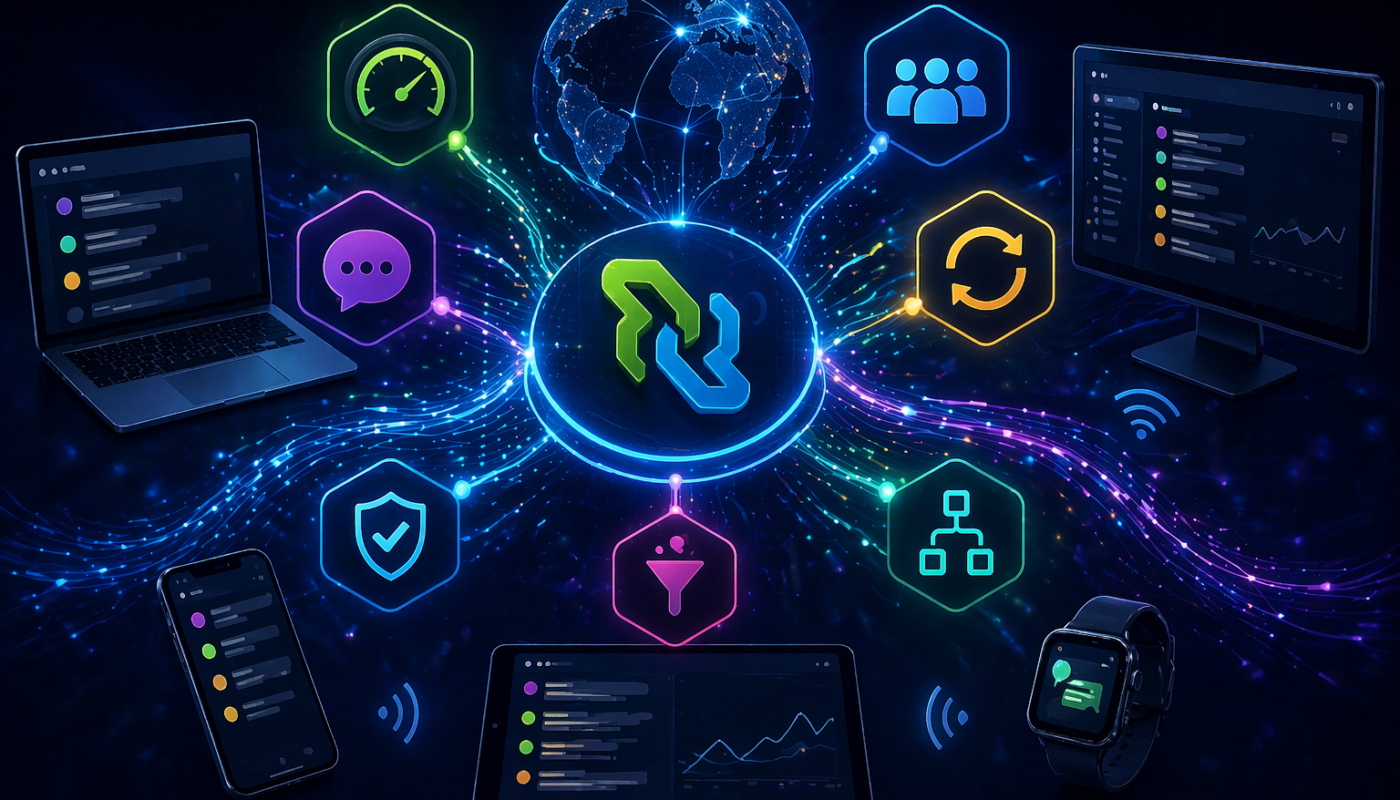
Modern applications are no longer static. Users expect instant updates, real-time notifications, and seamless interaction without refreshing the page. Whether it’s chatting with friends, tracking stock prices, or collaborating on documents, real-time communication has become a core requirement.
Traditional HTTP communication works on a request-response model, which means every interaction requires a new connection. This approach introduces latency, increases server load, and fails to deliver real-time performance.
WebSockets solve this problem by establishing a persistent, full-duplex communication channel between the client and server. This allows continuous data exchange in real time, making applications faster, more responsive, and highly interactive.
As businesses move toward real-time systems, WebSockets are becoming a foundational technology in modern web architecture.

What Are WebSockets?
WebSockets are a communication protocol that enables continuous, two-way (bidirectional) communication between a client and a server over a single TCP connection.
Unlike HTTP, which is stateless and requires a new connection for each request, WebSockets maintain a long-lived connection. Once established, both the client and server can send data at any time without waiting for a request.
Core Concept
- One connection → multiple data exchanges
- No repeated handshakes
- Real-time communication without delay
This significantly improves efficiency, reduces latency, and enhances user experience.For technical reference, developers can explore WebSocket API documentation for detailed implementation understanding.
WebSocket Architecture in Modern Systems
In real-world applications, WebSockets are not used alone—they are part of a larger architecture.
Typical Architecture Includes:
- WebSocket Server (Node.js, Python, Java)
- Load Balancer (NGINX, HAProxy)
- Message Broker (Kafka, RabbitMQ)
- Database (for persistence)
- Monitoring tools
Flow:
Client ↔ WebSocket Server ↔ Message Queue ↔ Backend Services
This architecture ensures scalability, reliability, and performance.
How WebSockets Work
1. HTTP Handshake
Client sends a request to upgrade the connection.
2. Protocol Upgrade
Server switches protocol from HTTP → WebSocket.
3. Connection Established
A persistent TCP connection is created.
4. Data Exchange
Messages flow instantly in both directions.
5. Keep Alive / Ping-Pong
Connection is maintained using heartbeat signals.
6. Closing Connection
Connection closes when no longer needed.
7 Powerful WebSocket Techniques
1. Connection Pooling & Management
Efficiently manage thousands of concurrent connections using connection pools and resource allocation strategies.
2. Event-Driven Architecture Integration
Combine WebSockets with event-driven systems to process real-time data streams efficiently.
3. Message Queues for Scalability
Use Kafka or RabbitMQ to handle high-throughput messaging and prevent data loss.
4. Secure Communication (WSS + Authentication)
Implement:
- SSL/TLS encryption
- Token-based authentication
- Rate limiting
5. Horizontal Scaling with Load Balancers
Distribute WebSocket connections across multiple servers using load balancers for high availability.
6. Data Compression & Optimization
Reduce payload size using compression techniques to improve speed and reduce bandwidth usage.
7. Real-Time Monitoring & Auto Scaling
Use monitoring tools to track:
- Latency
- Connection health
- Throughput
Automatically scale infrastructure based on demand.
Real-World Use Cases of WebSockets
Chat Applications
Instant messaging without delays (WhatsApp, Slack)
Financial Systems
Live stock prices and trading updates
Online Gaming
Real-time multiplayer interactions
Live Dashboards
Analytics dashboards updating in real time
Collaboration Tools
Google Docs-style live editing
Benefits of WebSockets
Ultra-Low Latency
Instant communication improves performance drastically.
Reduced Infrastructure Cost
Fewer HTTP requests reduce server load and bandwidth usage.
High Scalability
Supports thousands of concurrent users.
Continuous Data Flow
Perfect for streaming and real-time systems.
Challenges & Limitations
Complex Implementation
Requires advanced backend architecture.
Security Risks
Needs proper encryption and validation.
Load Handling
High traffic requires scaling strategies.
Best Practices for WebSocket Implementation
Automating deployment and testing improves reliability in WebSocket-based applications, and CI/CD automation ensures faster and safer delivery cycles.
- Always use WSS (secure protocol)
- Implement authentication (JWT, OAuth)
- Use message queues for reliability
- Monitor connections continuously
- Handle disconnections gracefully
- Limit connection timeouts
- Optimize payload size
Future of WebSockets
WebSockets will continue evolving with:
- Edge computing integration
- AI-driven real-time systems
- Serverless architectures
- IoT real-time communication
They will remain a backbone technology for real-time applications.
WebSockets vs Long Polling: Which Is Better?
Long polling is a traditional technique where the client repeatedly sends requests to the server to check for updates. This approach increases server load and introduces latency because multiple unnecessary requests are processed.
WebSockets eliminate this inefficiency by maintaining a persistent connection. Instead of repeatedly asking for updates, the server pushes data instantly to the client whenever changes occur.
Key Comparison:
- Long Polling → Higher latency, more server load
- WebSockets → Real-time updates, efficient communication
For modern real-time applications, WebSockets are significantly more efficient and scalable.
WebSocket Implementation in Popular Tech Stacks
WebSockets can be implemented across multiple programming languages and frameworks, making them highly flexible.
Node.js
- Socket.IO
- ws library
Python
- Django Channels
- FastAPI WebSockets
Java
- Spring WebSocket
.NET
- SignalR
Each framework provides built-in tools to manage connections, events, and message handling efficiently.
Common Security Risks in WebSockets
Security is a critical factor in WebSockets, especially when dealing with vulnerabilities, and proper protection requires OWASP security testing to prevent attacks.
Cross-Site WebSocket Hijacking
Attackers may exploit active sessions to gain unauthorized access.
Injection Attacks
Malicious data can be injected into the communication stream.
Denial of Service (DoS)
Excessive connections can overwhelm the server.
To prevent these risks, always use secure protocols, authentication, and validation mechanisms.
Tools and Technologies for WebSocket Development
Several tools and platforms simplify WebSocket development:
- Socket.IO
- SignalR
- Firebase Realtime Database
- Pusher
- Ably
These tools help developers build scalable and reliable real-time systems quickly.
Conclusion
WebSockets are a game-changer in modern web development. By enabling persistent, real-time communication, they eliminate latency and improve application performance significantly.
Businesses that leverage WebSockets can build faster, smarter, and more interactive applications that meet modern user expectations.