 by
by Introduction
Modern applications demand APIs that are fast, scalable, and efficient. Whether it’s mobile apps, web platforms, SaaS products, or enterprise systems, API performance directly affects user experience.
This is where GraphQL performance optimization becomes important.
GraphQL has transformed API development by allowing clients to request exactly the data they need. Unlike traditional REST APIs, GraphQL reduces over-fetching and under-fetching problems. However, poor GraphQL implementation can create serious performance bottlenecks.
In 2025, businesses building scalable systems must optimize GraphQL APIs for speed, efficiency, and reliability.
What is GraphQL?
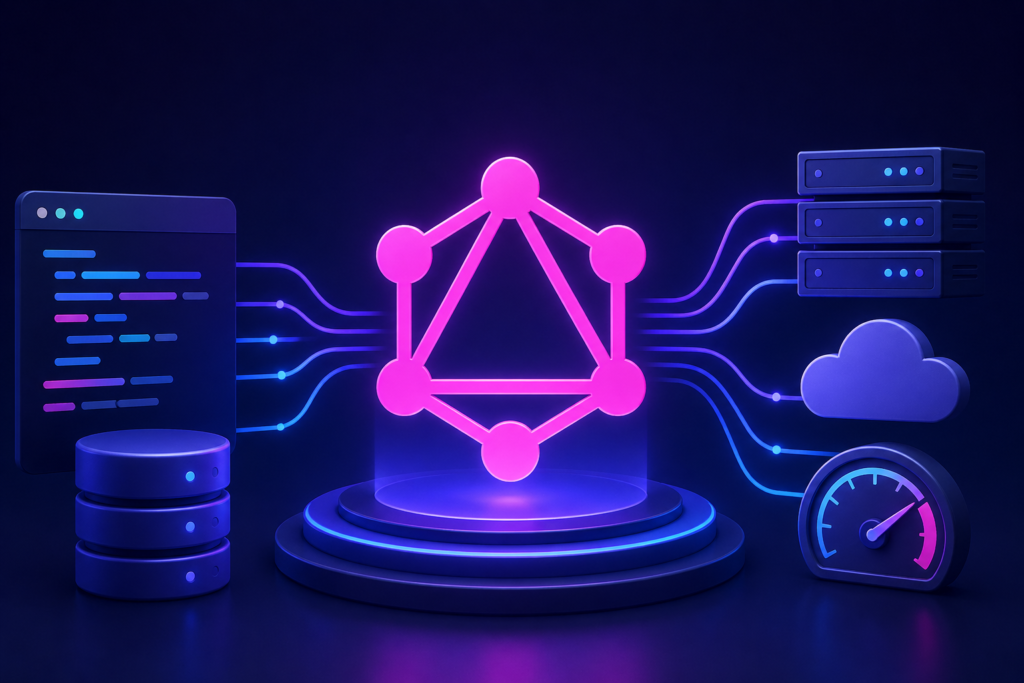
GraphQL is a query language for APIs and a runtime for executing those queries.
Instead of multiple endpoints like REST:
/users/orders/products
GraphQL uses a single endpoint where clients request only the needed data.
Example:
A client can request:
- User profile
- Orders
- Payment history
in one API call.
This improves efficiency but creates optimization challenges if not managed properly.
Why GraphQL Performance Optimization Matters
Strong API gateway management helps optimize traffic routing and improve GraphQL API efficiency.
As APIs scale:
- Queries become more complex
- Traffic increases
- Database load grows
- Response times slow
Poor GraphQL optimization can lead to:
- Slow APIs
- High server load
- Database bottlenecks
- Poor user experience
Optimized GraphQL APIs help businesses achieve:
- Faster responses
- Lower infrastructure costs
- Better scalability
- Improved app performance
Common GraphQL Performance Problems
1. N+1 Query Problem
One query triggers many database calls.
Result:
Performance drops significantly.
2. Overly Complex Queries
Deep nested queries consume resources.
Result:
Higher CPU and memory usage.
3. Large Response Payloads
Unoptimized fields increase payload size.
Result:
Slow network transfers.
4. Poor Caching Strategy
Without caching:
Every request hits the database.
Result:
High database load.
5. Unoptimized Resolvers
Slow resolver logic affects API speed.
Result:
Delayed responses.
7 Powerful GraphQL Performance Optimization Techniques
1. Use DataLoader for Batch Processing
DataLoader helps solve the N+1 query problem.
Benefits:
- Batches multiple database requests
- Reduces duplicate queries
- Improves efficiency
Example:
Instead of 100 database calls:
Use one batched request.
2. Implement Query Complexity Limits
Limit query depth and complexity.
Benefits:
- Prevent abuse
- Protect server resources
- Improve performance
Best practice:
Set maximum nesting depth.
3. Enable Response Caching
Using Apollo query optimization techniques like cache redirects and prefetching can significantly reduce API response time.
Caching reduces repeated processing.
Types:
- Resolver caching
- Query caching
- CDN caching
Benefits:
- Faster responses
- Lower database load
4. Optimize Database Queries
Efficient database queries improve API perforApplying backend API performance optimization strategies improves database query speed and API response performance.
Strategies:
- Indexing
- Query optimization
- Pagination
Benefits:
- Faster data retrieval
- Better scalability
5. Use Pagination for Large Data Sets
Pagination is an important part of GraphQL performance optimization because it reduces unnecessary data loading.
Avoid loading large data in one request.
Methods:
- Cursor pagination
- Offset pagination
Benefits:
- Faster responses
- Reduced memory usage
6. Optimize Resolvers
Resolvers must be lightweight.
Best practices:
- Reduce business logic inside resolvers
- Avoid nested heavy operations
- Reuse service layers
Benefits:
- Faster execution
- Better scalability
7. Use Persisted Queries
Store frequently used queries.
Benefits:
- Reduced parsing overhead
- Better security
- Faster execution
Perfect for:
- Mobile apps
- High-traffic systems
Best Tools for GraphQL Optimization
Apollo Server
Provides:
- Caching
- Monitoring
- Query analysis
GraphQL Yoga
Useful for performance improvements.
Prisma
Helps optimize database queries.
Redis
Improves caching performance.
New Relic
Monitors API performance.
Real-World Use Cases
E-commerce Platforms
Fast product filtering and order management.
Benefits:
- Better user experience
- Faster checkout
Mobile Applications
Efficient data fetching for mobile apps.
Benefits:
- Lower bandwidth
- Faster loading
SaaS Platforms
Improved dashboard performance.
Benefits:
- Better scalability
- Faster analytics
Social Media Platforms
Optimized feeds and messaging systems.
Benefits:
- Real-time performance
- Better engagement
Enterprise Systems
Complex business workflows need optimized APIs.
Benefits:
- Stability
- High performance
Best Practices for GraphQL Performance Optimization
A strong GraphQL performance optimization strategy helps reduce latency and improve API efficiency in high-traffic applications.
Use Field-Level Monitoring
Track slow fields.
Limit Query Depth
Prevent expensive nested queries.
Use Caching Layers
Reduce repeated database hits.
Optimize Database Schema
Improve backend efficiency.
Monitor API Metrics
Track latency and errors.
Use CDN Integration
Improve content delivery speed.
Future of GraphQL Optimization
The future of GraphQL performance includes:
- AI-driven query optimization
- Smarter caching systems
- Better monitoring tools
- Advanced resolver optimization
- Edge API deployments
Businesses investing in GraphQL optimization will achieve faster, scalable API systems.
FAQs
What is GraphQL performance optimization?
It is the process of improving GraphQL API speed, efficiency, and scalability.
Why is GraphQL faster than REST?
It reduces unnecessary data fetching.
How do I fix N+1 query problems?
Use DataLoader.
Is caching important in GraphQL?
Yes, caching significantly improves performance.
Which tool is best for GraphQL optimization?
Apollo Server and Redis are popular choices.
Conclusion
GraphQL is powerful, but performance optimization is essential for scaling modern APIs. Implementing proper GraphQL performance optimization techniques can significantly improve API response times and database efficiency.
By implementing these 7 powerful GraphQL performance optimization techniques, businesses can improve:
- API speed
- User experience
- Scalability
- Infrastructure efficiency
In 2025, optimized GraphQL APIs will become a major competitive advantage.